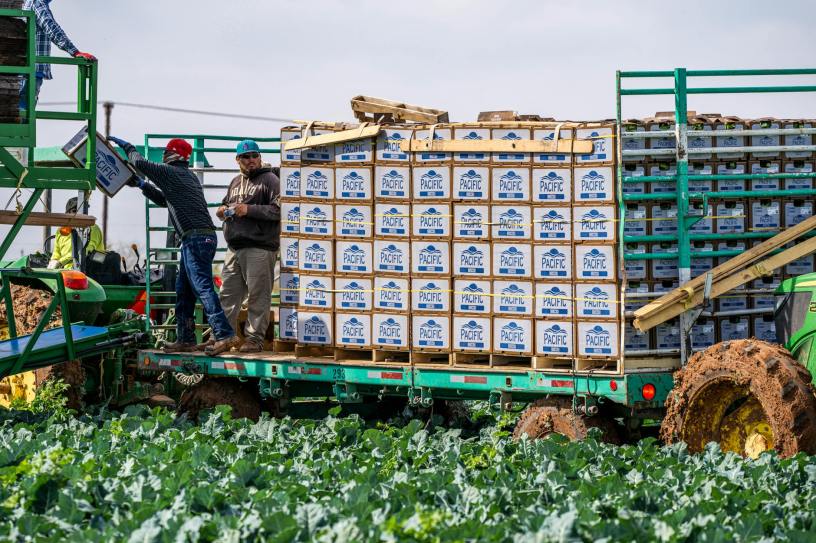
As the U.S. prepares for changes in immigration policy under the incoming administration, the situation for migrant farm workers, particularly in agricultural hubs like California’s Central Valley, is becoming increasingly alarming. The California Farm Bureau has voiced concerns that a growing climate of fear regarding deportation is taking a toll on these essential laborers.
Many migrant workers are choosing to abstain from their jobs or cut back their hours due to anxieties surrounding their legal status. This trend has been magnified by the announcement from President-elect Donald Trump regarding his commitment to enforce strict immigration regulations, which has left many workers feeling vulnerable in their roles.
The agricultural sector heavily relies on immigrant labor, and the prospect of mass deportations looms large. Such an event could severely disrupt the labor supply, especially during critical farming seasons when crops are ready for harvest. Experts warn that the economic implications of losing these workers could be devastating for numerous farms across the nation, threatening both productivity and viability in a sector already facing challenges.
Beyond the economic impacts, the emotional toll on these workers cannot be overlooked. Many of them are grappling with the difficult decision of whether to continue their vital contributions to the U.S. economy or to prioritize their personal safety and wellbeing in light of potential deportation risks.
As the situation unfolds, it is crucial for stakeholders in the agricultural industry to advocate for policies that protect the rights and livelihoods of migrant workers, ensuring that one of the nation’s most critical workforces is not lost to fear and uncertainty.
 Occupy 2.5