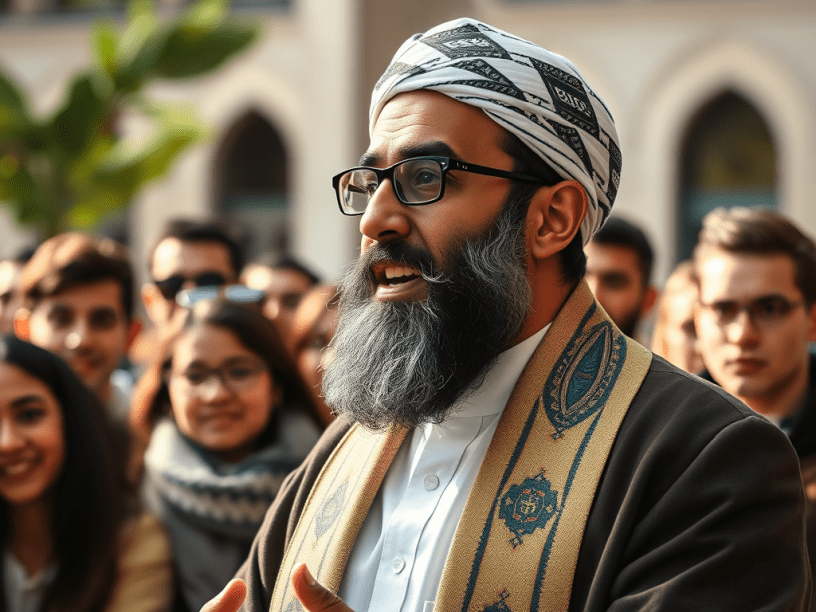
Sheikh Mohammed El-Yaqoubi and the Discourse on U.S. College Campuses
Sheikh Mohammed El-Yaqoubi is a prominent Islamic scholar and cleric widely recognized for his advocacy of Palestinian rights. With a substantial background in religious education, he has positioned himself as a vocal critic of Israeli policies and a proponent for the Palestinian cause. El-Yaqoubi’s public presence has often been felt in U.S. college campuses, where he engages with student bodies and addresses complex issues surrounding the Israeli-Palestinian conflict. While his advocacy highlights the plight of displaced Palestinians and the urgent need for their rights and dignity, the implications of his discourse have sparked debates about its impact on campus climate and the broader narratives regarding the conflict.
The claims made regarding Sheikh Mohammed El-Yaqoubi’s influence on college campuses and his purported promotion of anti-Jewish sentiment and pro-Hamas propaganda necessitate a nuanced and careful examination based on available evidence.
Sheikh Mohammed El-Yaqoubi is indeed a recognized figure with extensive experience in religious education. He is known for his passionate advocacy for Palestinian rights and has been critical of Israeli policies. However, assertions about his significant influence on U.S. college campuses and specific allegations of inciting anti-Jewish sentiment require clarification. Presently, there is insufficient documented evidence directly linking him to substantial incidents of anti-Jewish behavior or the proliferation of pro-Hamas propaganda within the campus environment.
The issue of anti-Jewish extremism on college campuses in the USA has become increasingly prominent, especially against the backdrop of rising antisemitism. A multitude of incidents linked to anti-Israel sentiment has been documented, with organizations like the Anti-Defamation League (ADL) reporting over 2,000 anti-Israel incidents on campuses between June 2023 and May 2024. While specific information on Palestinian foreign nationals in the USA promoting anti-Jewish extremism is not readily available, it is important to note that various organizations and activist groups have been reported to engage in anti-Israel rhetoric and activities that have, at times, crossed into antisemitism. This upsurge in antisemitic incidents aligns with heightened tensions following significant events in the Israeli-Palestinian conflict, as documented by the ADL. They have noted a troubling increase in incidents, such as harassment and vandalism, particularly in academic environments. However, the ADL has not specifically pinpointed individuals or foreign nationals as instigators of such extremism. Instead, the focus has largely been on the actions of certain groups involved in pro-Palestinian activism, which have sometimes employed inflammatory language.
Within this complex context, Sheikh El-Yaqoubi’s presence is a notable factor that warrants careful consideration. While numerous anti-Israel demonstrations and instances of antisemitism have been reported, it is essential to recognize that El-Yaqoubi’s role in these specific events is not prominently featured in the available data. The ADL has documented many instances of antisemitism, yet Sheikh El-Yaqoubi has not been directly identified in those records.
Concerns have been raised about El-Yaqoubi’s discourse being laden with misinformation and misleading narratives. Discussions surrounding the Israeli-Palestinian conflict are often emotionally charged and can encompass oversimplifications; however, the distinct accusations against El-Yaqoubi regarding disseminating misinformation lack substantial backing from the reviewed sources. It is crucial to approach this subject thoughtfully, acknowledging the valid frustrations and aspirations of the Palestinian people while ensuring that discussions remain grounded in factual evidence.
Additionally, a notable discussion on July 10, 2024, featured Vice President Kamala Harris, who articulated her endorsement of pro-Palestinian protesters, emphasizing them as embodiments of the essential human emotional response to the dire situation in Gaza. She underscored the necessity of fostering empathy and understanding amidst conflict, aiming to create a bridge in the discourse surrounding the deeply rooted tensions. However, her comments were met with sharp criticism from unnamed Israeli officials, especially considering her choice to forgo Prime Minister Benjamin Netanyahu’s address to Congress, which heightened perceptions of a diplomatic rift. While Harris affirmed her acknowledgment of the protesters’ sentiments, she also took a stand against extreme rhetoric and actions that exacerbate the conflict, effectively striving to strike a delicate balance between advocating for peaceful protest and denouncing expressions borne from hatred. This nuanced approach reflects the complexities of navigating a multifaceted geopolitical landscape while promoting dialogue and reconciliation.
While it is posited that El-Yaqoubi’s presence hinders constructive dialogue and fosters divisiveness, the specific evidence directly linking him to such disruptions remains unclear based on existing information. This concern is frequently echoed in discussions surrounding contentious figures on college campuses, but without clear documentation of his role in these dynamics, it is difficult to assess the impact of his presence accurately.
In conclusion, while Sheikh Mohammed El-Yaqoubi occupies a notable position in the discourse surrounding Palestinian rights, particularly in highlighting the difficult circumstances faced by many displaced Palestinians, the assertions regarding his role in promoting anti-Jewish sentiment and misinformation within U.S. college campuses do not rest on strong support from the current body of evidence. An examination of the available data suggests that while the atmosphere on campuses can be charged with emotion and tension, attributing this dynamic solely to El-Yaqoubi may overlook the broader context of various organizations and movements that participate in inflammatory discourse.
A more thorough investigation into his public speeches and activities would be necessary to arrive at a more conclusive understanding of his impact and rhetoric. It is also crucial to distinguish between legitimate advocacy for Palestinian rights and rhetoric that crosses into antagonism toward Jewish communities. This differentiation is vital for fostering constructive dialogue that respects the rights and dignity of both Palestinians and Israelis.
Ultimately, the need for empathetic and factual discourse remains paramount, especially in an environment where tensions can easily escalate. By focusing on credible evidence and engaging in respectful dialogue, all parties can strive toward a deeper understanding of the multifaceted issues at play in the Israeli-Palestinian conflict. This approach will not only advance the cause of justice for Palestinians but also contribute to a safe and respectful atmosphere for Jewish students on campuses.
Encouraging environments of mutual respect and understanding is crucial as communities work toward peaceful coexistence. It is important to engage thoughtfully with the content and context of speakers like Sheikh El-Yaqoubi, allowing for productive discourse that illuminates the genuine humanitarian concerns surrounding the Palestinian experience while acknowledging and respecting the historical and cultural narratives of Jewish communities.
In summary, addressing the sensitive subjects surrounding the Israeli-Palestinian conflict requires a deliberate balancing act—one that is rooted in empathy, factual accuracy, and a commitment to peaceful dialogue. Such an approach will allow for a better understanding of the complexities involved and help build bridges that contribute to a more inclusive and understanding environment for all students navigating these discussions on campus.
JAFO: Do you have confidence in 47’s strategy concerning the Palestinian situation? In order to provide meaningful support to the Palestinian people, it is imperative that the American oligarchy be dismantled.
 Occupy 2.5