Introduction
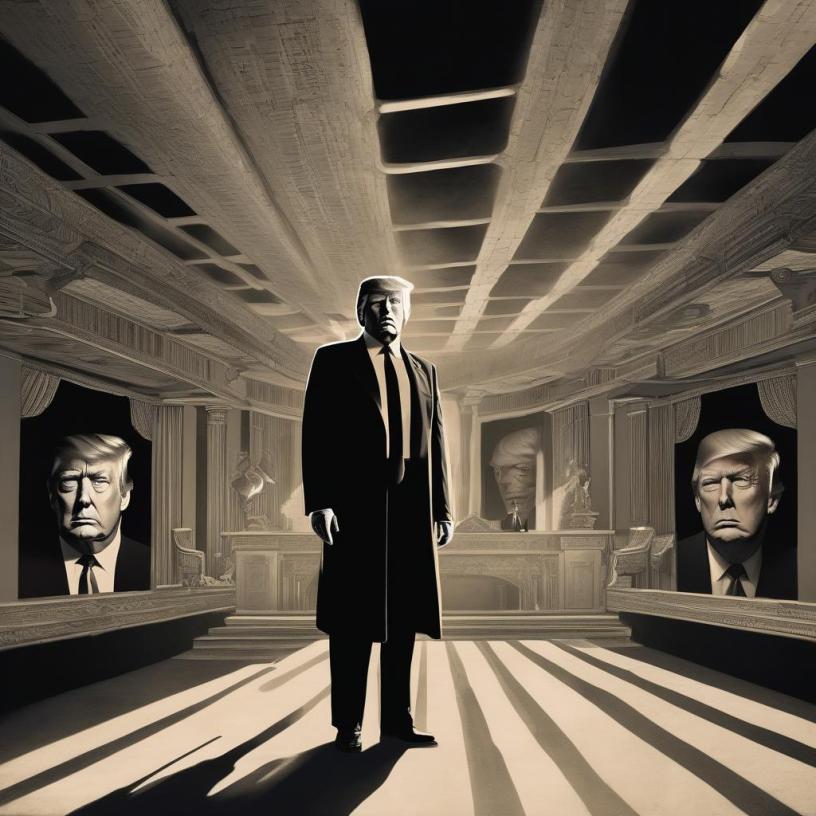
The political landscape of the United States has been profoundly affected by allegations of foreign interference, particularly concerning Donald Trump’s alleged ties to Russia as detailed in the Mueller Report. This essay seeks to draw parallels between these allegations and the fictional narrative of the “Manchurian Candidate,” a story of manipulation and subversion. By examining these connections, we can explore whether Trump’s behavior resonates with the archetype of the Manchurian Candidate, or if they are merely products of political hyperbole and conspiracy theory.
The Mueller Report, released in 2019, documents numerous contacts between Trump campaign officials and Russian agents, investigating potential collusion during the 2016 presidential election. Although the report did not establish that the Trump campaign conspired with Russia to influence the election, it identified significant interactions that raised eyebrows and sparked widespread speculation regarding Trump’s loyalties and the extent of Russian influence on his presidency.
The concept of the Manchurian Candidate, originating from Richard Condon’s 1959 novel, tells the story of an American soldier who is brainwashed to become an unwitting assassin for a foreign government. The narrative explores themes of control, betrayal, and altered loyalties, resonating strongly in contexts where national security is at stake. The imagery of a puppet controlled by a hidden master invites comparisons to real-world political scenarios, particularly where foreign powers might exploit individuals for their agendas.
While the allegations surrounding Trump and Russia reflect a complex web of political maneuvering, comparing him to the fictional Manchurian Candidate requires careful consideration of the evidence and the motivations behind such narratives. The core of the Manchurian Candidate narrative revolves around manipulation. One could argue that Trump’s behavior—his reluctance to criticize Putin and his acceptance of Russian election interference—invites speculation about his independence as a leader. However, while the novel suggests overt control, Trump’s actions may stem from a combination of ideology, business interests, and a desire for diplomatic engagement.
The concept of betrayal is also central to the Manchurian Candidate, embodying a failure to prioritize national security. Critics of Trump highlight moments where he appeared to sideline American interests, notably in his dealings with NATO and Ukraine. Yet, these actions are contentious debates rather than clear-cut betrayals, illustrating the polarized nature of contemporary politics.
Additionally, the Manchurian Candidate thrives on sensationalism and fear, much like the media coverage surrounding Trump’s Russian ties. Both narratives resonate with audiences holding entrenched beliefs, often overshadowing nuanced discussions with polarizing rhetoric. The conspiratorial overtones evoke fear of hidden influences, prompting the question of whether there is a difference between legitimate investigation and sensational speculation.
In the context of the Manchurian Candidate, the driving force behind actions is psychological manipulation. However, Trump’s behavior can often be attributed to his personal background, style, and approach to leadership—factors that differentiate him from the archetypal puppet portrayed in fiction.
While the Mueller Report unveiled a series of complex interactions between Trump and Russian entities, categorizing him as a modern Manchurian Candidate oversimplifies the realities of his presidency and the political landscape. The elements of manipulation, betrayal, and psychological control sitting at the heart of the Manchurian Candidate narrative serve as cautionary tales for contemporary politics, yet they are not entirely applicable to the multifaceted situation surrounding Trump. As we crawl this intricate web of political discourse, it is essential to assess facts critically rather than succumb to dramatic narratives, or so the government tells us.
 Occupy 2.5