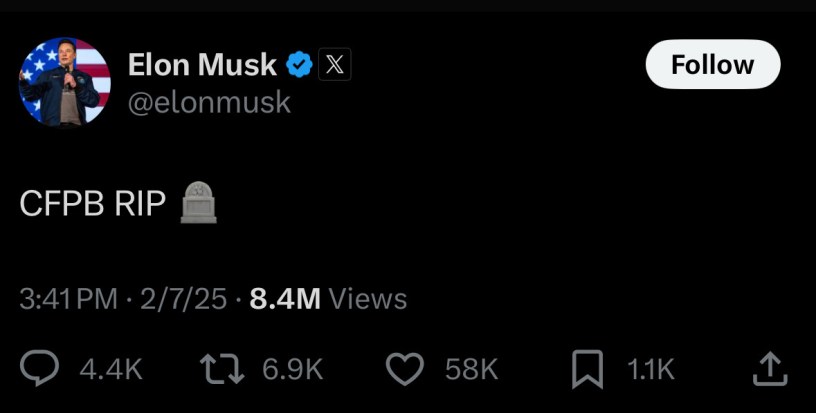
CFPB Under Threat: 47th President’s Authority Questioned
In a controversial development, the newly appointed Treasury Secretary Scott Bessent has directed the Consumer Financial Protection Bureau (CFPB) to suspend much of its ongoing activities, prompting a fierce debate regarding the legality and implications of such actions. Established by Congress in 2010 in response to the financial crisis, the CFPB was designed to protect consumers from unfair, deceptive, or abusive practices in the financial sector. Its funding is derived from the Federal Reserve, reinforcing its independence from direct political influence.
Critics are quickly raising concerns that the 47th President lacks the unilateral authority to dismantle or curtail the CFPB’s operations. Legal experts emphasize that the Bureau, created through a comprehensive legislative process, cannot simply be shut down without Congressional approval. The CFPB has played a crucial role in enforcing consumer rights, and any abrupt cessation of its activities could threaten ongoing initiatives that aim to provide financial relief to millions of Americans.
Consumer advocacy groups and lawmakers are expressing outrage over the directive, viewing the CFPB as an essential oversight body in the financial landscape. “Stopping CFPB enforcement actions that are set to deliver financial relief to working people runs counter to the principles of democracy and accountability,” declared a leading consumer rights advocate, emphasizing the significance of safeguarding consumer protections.
As this situation develops, calls for immediate clarification from the White House are growing louder. Advocates are demanding to understand the limits of the President’s authority over the CFPB and what this means for the future of consumer protections in America. The implications of this directive could significantly affect everything from mortgage lending to credit card practices, raising alarm bells as support mounts for preserving this pivotal agency in the face of perceived political overreach. The future of the CFPB hangs in the balance as advocates rally to protect this crucial consumer protection agency from potential erosion of its powers.
The Consumer Financial Protection Bureau
The Consumer Financial Protection Bureau (CFPB) was established on July 21, 2011, during the presidency of Barack Obama, who was in office at that time, advocating for stronger consumer protections following the financial crisis of 2008.
The CFPB was created through the Dodd-Frank Wall Street Reform and Consumer Protection Act, a significant piece of legislation aimed at reforming financial regulations. The bill was primarily sponsored by two prominent Democratic legislators: Senator Chris Dodd from Connecticut, who chaired the Senate Banking Committee, and Representative Barney Frank from Massachusetts, who was then the Chairman of the House Financial Services Committee. Their leadership played a crucial role in pushing for reforms that sought to protect consumers from abusive practices in the financial industry. The establishment of the CFPB marked a pivotal development in the landscape of consumer protection, reflecting a response to widespread calls for accountability and transparency in the financial sector.
Re:
 Occupy 2.5