By Carl Kolchak
As the sun dipped below the horizon, casting long shadows across Washington, D.C., the murmurings of a chilling alliance between Marco Rubio and Donald Trump began to swirl through the corridors of power like a harbinger of doom. Newly appointed as Secretary of State, Rubio—a name once synonymous with hope and reform—was now entangled in a web of foreign policy that promised to turn the world on its head.
Rubio’s confirmation on January 21, 2025, was welcomed by a bipartisan cheer, but little did they know, he was stepping into a role designed to fortify Trump’s ominous “America First” doctrine. A doctrine that had already redefined the rights of international allies and restructured the very fabric of diplomatic relations.
Under the shadow of these new policies, the traditional power dynamics were upended. America’s global relationships, once grounded in mutual respect and cooperation, were increasingly shaped by a singular focus on America’s interests—often to the detriment of the broader international community.
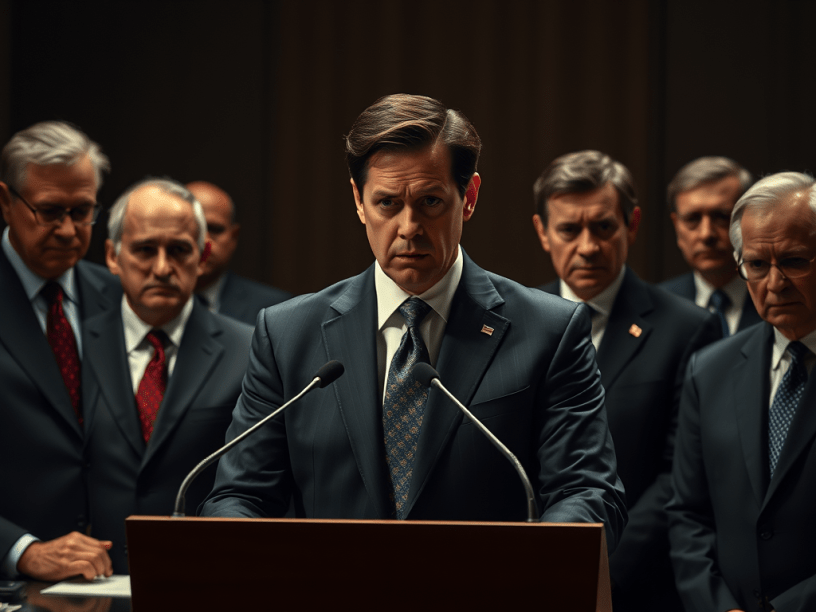
As March rolled in and the G7 summit approached, tensions began to mount. Rubio, clad in a tailored suit that did little to hide the anxiety underneath, prepared to face foreign ministers from nations that had once considered the U.S. a steadfast ally. The ghosts of economic tariffs floated ominously in the air, threatening to suffocate diplomatic negotiations and issue haunting warnings about the potential for colder wars.
“Are you prepared for the reception you’ll get in Canada?” a keen reporter asked him, drawing a knowing glance from Rubio. The air felt heavy with anticipation, whispers of resentment and disappointment clearly echoing through the halls leading to the summit venue.
On March 12, a pre-summit briefing took place, where Rubio further defended Trump’s decision to impose tariffs on steel and aluminum. The tables were turning, and those who once embraced American leadership were now poised to confront it with doubts and disdain. “We’ll focus on cooperation on defense and security issues,” Rubio declared, but his words barely masked the tremors of uncertainty beneath.
As the meeting unfolded, Canada’s Foreign Minister Mélanie Joly threw down the gauntlet, demanding answers about the trade war. With each question, Rubio felt the walls of his credibility closing in. The G7 discussions, once a bearer of prospects for collaboration, had transformed into a battleground fueled by resentment and distrust. Cold glares and stiff postures filled the room, a far cry from the camaraderie of previous years.
Outside the negotiating halls, the repercussions of America’s new stance on immigration played out in sinister ways. Activist Mahmoud Khalil became the latest victim of this austere regime, facing a deportation order simply for voicing dissent. Rubio, unfazed amidst the crowd of protesters clamoring for justice, blasted his critics, claiming the incident was about national security, not free speech. The echoes of his discourse reverberated ominously, as if to warn dissenters of repercussions far graver than what was previously foreseen.
“Is this the new America?” one onlooker whispered as they watched the shadows lengthen around them. The fervent cries for freedom seemed to fall on deaf ears in the presence of a vengeful political machine, one that proudly proclaimed itself to be making America great again by turning its back on anyone daring to oppose its vision.
As midnight approached and the G7 discussions drew to a close, the sense of dread weighed heavier than the sum of its parts. For now, Rubio walked away, cloaked in the confidence of a man committed to a singular vision. But as the world waited, the questions loomed larger than life: What would become of alliances once cherished? What specters would rise in response to America’s self-imposed isolation?
In this chilling time, as the sun set on the once bright beacon of hope that America represented to many, the world braced for the darker days ahead, knowing full well that the foundation of “America First” was built not on alliances, but on the fragile ice of fear, suspicion, and turbulence.
Sources:
- “Marco Rubio.” U.S. Department of State, U.S. Government, 21 Jan. 2025, https://www.state.gov/marco-rubio/.
- “Rubio Could Face an Unfriendly Reception from Close G7 Allies over Trump’s Policies.” The Manila Times, Associated Press, 13 Mar. 2025, https://www.manilatimes.net/.
- “Live: US Secretary of State Rubio to Brief G7 Foreign Ministers on Ukraine Truce Talks.” France 24, 13 Mar. 2025, https://www.france24.com/en/.
- Lee, Matthew. “Rubio Could Face an Unfriendly Reception from Close G7 Allies over Trump’s Policies.” Associated Press, 13 Mar. 2025, https://apnews.com/.
- Basmat, Dmytro. “30-Day Ceasefire Deal May Be Struck Within Days, Rubio Says.” The Kyiv Independent, 12 Mar. 2025, https://kyivindependent.com/.
- Ewall-Wice, Sarah. “Marco Rubio Fires Back at Critics of Mahmoud Khalil’s ICE Arrest: ‘This Is Not About Free Speech.’” MailOnline, 12 Mar. 2025, https://www.dailymail.co.uk/.
- Levitan, Dave. “Marco Rubio Claims Sole Power Over Deporting Legal Residents for Protected Speech.” Paste, 12 Mar. 2025, https://www.pastemagazine.com/.
- Fields, Ashleigh. “Mahmoud Khalil Case ‘Not About Free Speech’: Rubio.” The Hill, 12 Mar. 2025, https://thehill.com/.
- Manhire, Toby. “Who Is Marco Rubio and What Can Winston Peters Expect from Their DC Meeting?” The Spinoff, 13 Mar. 2025, https://thespinoff.co.nz/.
- Rogers, Alexandra. “US Ramps Up Pressure on Russia to Accept 30-Day Ukraine Ceasefire.” Sky News, 12 Mar. 2025, https://news.sky.com/.
- Holmes, Oliver. “Rubio Says Trump’s ‘51st State’ Plan Not on G7 Summit Agenda in Canada.” The Guardian, 12 Mar. 2025, https://www.theguardian.com/.
- Zadorozhnyy, Tim. “US ‘Will Not Be Providing’ Military Aid to Russia, Rubio Says.” The Kyiv Independent, 11 Mar. 2025, https://kyivindependent.com/.
- Timotija, Filip. “Rubio Says Canada Takeover Won’t Be on G7 Agenda.” The Hill, 12 Mar. 2025, https://thehill.com/.
- “Marco Rubio Fires Back at Critics of Mahmoud Khalil’s ICE Arrest: ‘This Is Not About Free Speech.’” The Times of Israel, 12 Mar. 2025, https://www.timesofisrael.com/.
- “US Ends Military Aid Freeze After Ukraine Endorses 30-Day Ceasefire Proposal.” The Times of Israel, 11 Mar. 2025, https://www.timesofisrael.com/.
 Occupy 2.5