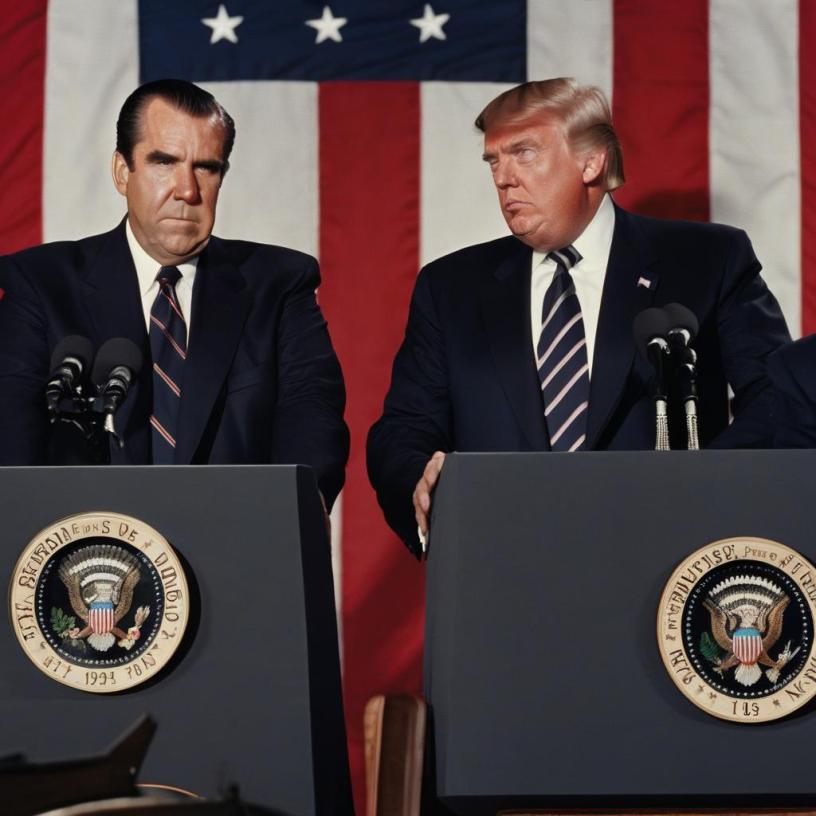
The concept of the Mad Man Theory in political strategy emerged as a noteworthy tactic during the presidency of Richard Nixon and has since been a subject of analysis in various political contexts. This theory posits that a leader who projects unpredictability or irrationality can strategically influence international relations by inducing caution or fear in adversaries, thereby gaining a diplomatic advantage. While originally associated with Nixon, this approach has found renewed relevance in the political discourse surrounding former President Donald Trump.
Richard Nixon’s application of the Mad Man Theory was predominantly during the Cold War, where projecting unpredictability was intended to keep adversaries like the Soviet Union and North Vietnam on edge, making them more susceptible to U.S. demands under the threat of potentially severe consequences. By cultivating an image of volatility, Nixon aimed to compel adversaries to approach negotiations with caution, unsure of how far he might go if pushed.
Fast forward to the elections and presidency of Donald Trump, where discussions about the Mad Man Theory saw a resurgence. Trump, known for his unconventional approach, unfiltered rhetoric, and often erratic behavior, was frequently perceived through the lens of this theory. Supporters claimed that his unpredictability on the world stage was not merely random but rather a conscious strategy aimed at unsettling both allies and adversaries. From challenging long-standing international alliances to engaging directly and at times contentiously with foreign leaders, Trump’s presidency was marked by a series of unexpected moves that left many world leaders questioning his intentions and future actions.
Arguably one of the most illustrative examples of this strategy was Trump’s interaction with North Korea. His initial aggressive rhetoric, including threats of “fire and fury,” starkly contrasted with subsequent efforts to directly engage with Kim Jong-un, signaling a blend of coercive diplomacy and strategic unpredictability. This oscillation between aggression and diplomacy exemplifies how unpredictability can function as a deliberate instrument in negotiations, potentially leading to otherwise improbable diplomatic dialogues.
However, the effectiveness of the Mad Man Theory, especially within the context of Trump’s tenure, remains a topic of debate. Critics argue that while it may foster a temporary advantage, consistent unpredictability can also undermine credibility and long-term diplomatic relationships. Furthermore, erratic behavior that is too convincing risks creating actual instability, as global actors may respond to perceived threats in ways that escalate rather than diffuse tensions.
The discussion around Trump’s application of the Mad Man Theory underscores the profound impact of perception and behavior in international politics. Unpredictability, when adeptly managed, can recalibrate power dynamics, compelling global actors to recalibrate their strategies in response. Nevertheless, achieving a balance between unpredictability and strategic clarity is crucial, as credibility remains a cornerstone of effective diplomacy.
Finally, the Mad Man Theory continues to serve as a provocative lens through which to analyze contemporary political strategies. In the case of Donald Trump, this theory provides insights into his distinctive approach to international relations, illustrating the nuanced interplay between perception and power. As global politics evolve, so too will the applications and interpretations of the Mad Man Theory, providing continued fodder for analysis and reflection in the pursuit of understanding the complex realm of international diplomacy.
On the other hand: Unpacking the Debate: Donald Trump’s Mental Health
Let’s break down the conversation about Donald Trump’s mental health in a way that’s clear and easy to understand. People talk a lot about whether Trump’s actions and behavior show signs of certain mental health issues, though nothing has been officially diagnosed.
Concerns About Thinking and Memory Problems
First, some experts think Trump might be showing early signs of memory problems, similar to what happens in conditions like dementia. This means they believe he might have trouble remembering things or using the right words, which they’ve noticed in his speeches. Imagine if someone keeps mixing up words or forgetting things; doctors could see this as a hint of a bigger problem with their thinking abilities.
Personality Traits and Behavior
Next, there’s a lot of talk about Trump possibly having something called narcissistic personality disorder. People with this condition often think very highly of themselves, need a lot of attention, and might not care much about others’ feelings. Some doctors have pointed out that Trump appears to have these traits. This is important because the way a leader behaves can affect how they make decisions and treat others.
Family History and Health Risks
Another point of discussion is Trump’s family, where some members have had problems with memory and thinking. Why does this matter? Well, if these problems run in the family, it might mean Trump could be more likely to have them too. However, just because it runs in the family doesn’t guarantee someone will have the same issues.
Rumors and Speculation
Lastly, there have been rumors that Trump might have problems because of an untreated STDs . However, these claims don’t have much solid proof behind them, and often come from stories or political arguments, not from doctors. It’s important to rely on facts and evidence when talking about someone’s health, rather than just repeating rumors.
An Overview of Trump’s Mental Health
People are looking closely at Trump’s mental health, mainly focusing on memory issues and personality traits. These are serious topics that need proper research and understanding from doctors who know about mental health. While there are many ideas floating around, it’s important to stick to what experts with real evidence have to say. This helps make sure the conversation stays true and helpful, especially when talking about the health of someone so well-known.,
But this extends beyond a mere critique of Mental Health: An In-Depth Analysis of the Mental Health Challenges Faced by Supporters of Donald J. Trump
As we delve into the mental health challenges faced by supporters of Donald J. Trump, we can apply various psychological and sociological theories to better understand their motivations and behaviors. This complex landscape is marked by feelings of disillusionment, a desire for order, and reactions to societal structures, all of which influence their political allegiance and mental well-being.
Strain Theory and Political Discontent
Strain Theory, a sociological framework, suggests that societal structures often dictate what goals are desirable and the means by which to achieve them. When individuals feel blocked from achieving these goals through conventional paths, they may resort to unconventional or deviant behavior. Many Trump supporters express dissatisfaction with traditional political systems and perceive them as corrupt or inequitable. This perceived inability to effect change within the conventional system leads them to endorse a non-traditional candidate like Trump, despite his legal controversies. For these supporters, backing Trump represents a rebellion against a system they feel has failed them, rationalizing support as necessary for meaningful change.
Authoritarianism and the Desire for Order
Research has shown that individuals with authoritarian traits—a preference for conformity and order—are often drawn to Trump’s leadership style. Such individuals may experience heightened anxiety when presented with contradictory information. Trump’s promises of strength and security can offer reassurance, making his leadership appealing, even when faced with his controversial legal issues. This desire for order amidst perceived chaos helps explain the sustained support from this group of individuals.
Social Dominance Orientation and Hierarchies
Another psychological concept that sheds light on Trump supporters’ motivations is Social Dominance Orientation (SDO), which refers to a preference for hierarchical social structures. Those with high SDO may hold stronger prejudices and exhibit entitlement, reinforcing social divisions and further influencing mental health dynamics. This orientation can lead to a heightened sense of validation while simultaneously amplifying social anxiety and perceived threats.
Prejudice, Dehumanization, and Empathy
Trump’s rhetoric has sometimes encouraged supporters to dehumanize marginalized groups, impacting the mental health of both these groups and the supporters themselves. This dehumanization process can increase feelings of guilt among supporters and reduce their capacity for empathy. Consequently, supporters may experience internal conflict and anxiety as they wrestle with these negative emotions and the resulting social isolation.
Terror Management Theory and Existential Anxiety
Terror Management Theory explains how individuals cope with existential fears, such as the anxiety surrounding mortality, by aligning with authoritative figures. Trump’s fear-based rhetoric provides a framework through which supporters find identity and control, albeit at the expense of increased anxiety about the validity of their beliefs. This alignment offers temporary relief from existential fears, even as it heightens anxiety in other areas.
Mirroring Pathological Narcissism
Trump’s own displays of narcissism—a heightened sense of self-importance and lack of empathy—can influence his supporters to mirror these traits. In doing so, they may develop inflated self-worth and diminished empathy, leading to complex psychological dynamics that entrench them in cycles of validation and insecurity. This mirroring process can further complicate their mental health challenges, as it fosters an environment of emotional volatility.
Conclusions About MEGA
Combining Strain Theory with other social psychological insights helps illuminate the mental health challenges faced by Trump supporters. Their motivations are shaped by a complex mix of political discontent, authoritative tendencies, and psychological coping mechanisms, leading to increased anxiety, prejudice, and social division. Understanding these dynamics highlights the need for deeper research into the intersecting psychological and sociological factors that drive support for this controversial figure, offering pathways for more empathetic and informed discussions in the future.
What the World Needs to Grasp
The multifaceted exploration of Donald Trump’s influence and the mental health challenges faced by his supporters unveils a complex interplay of political strategy, psychological phenomena, and societal discontent. Trump’s application of the Mad Man Theory highlights strategic unpredictability in international relations, akin to tactics used by Nixon, aimed at unsettling adversaries and allies. However, his unpredictability’s effectiveness remains debated, as critics warn of instability risks. Concurrently, discussions about Trump’s mental health suggest potential cognitive decline and personality traits like narcissism, with familial and speculative factors further complicating these assessments. The focus also shifts to his supporters, who may experience mental health challenges tied to disillusionment with societal structures, authoritarianism, and social dominance, often reinforced by Trump’s rhetoric. These dynamics, analyzed through Strain Theory and other psychological frameworks, reveal motivations driven by anxiety and identity struggles. Together, these discussions highlight the intricate connections between leadership behavior, public perception, and mental well-being, emphasizing the need for thorough analysis and understanding in socio-political discourse.
 Occupy 2.5