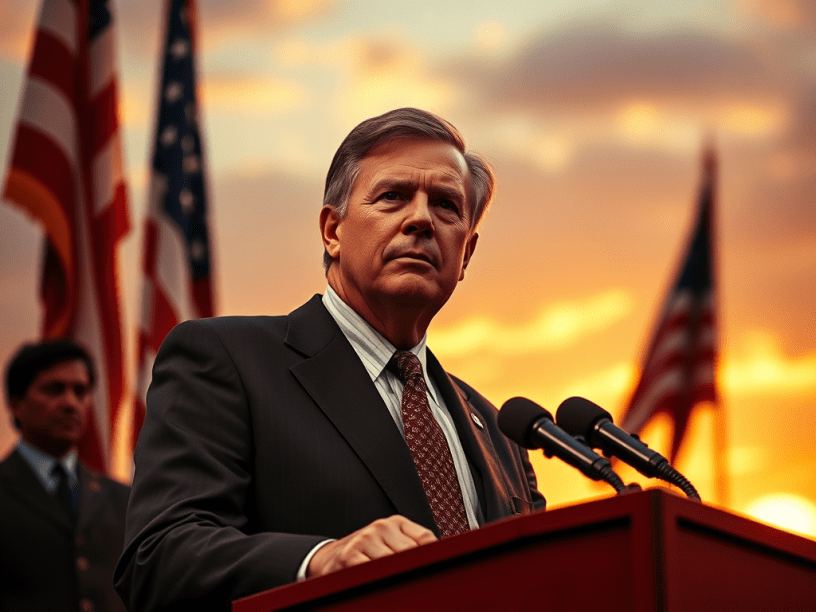
Gerald R. Ford, the 38th President of the United States, ascended to the highest office during one of the most turbulent periods in American history. Serving from 1974 to 1977, his presidency was set against the backdrop of the Watergate scandal, economic turmoil, and a nation grappling with the fallout from the Vietnam War. Ford’s tenure is often characterized by its complex mixture of accomplishments and profound challenges, particularly in domestic policy.
Accomplishments of the Ford Presidency
One of Ford’s most notable achievements was his immediate effort to restore public confidence in government after the disillusionment caused by Watergate. Upon assuming the presidency, he famously declared, “Our long national nightmare is over,” reflecting a commitment to unity and healing. His approach aimed to reassure the American public and restore faith in the presidency’s integrity.
Ford’s presidency also saw significant foreign policy achievements. He continued the policy of détente with the Soviet Union, a strategy initiated by his predecessor, Richard Nixon, aimed at easing tensions between the two superpowers. Ford’s administration successfully navigated complex international waters, signing the Helsinki Accords in 1975, which focused on improving relations between the Communist bloc and the West while promoting human rights.
Additionally, Ford’s decisive actions during critical events helped solidify his leadership reputation. His decision to conduct the airlift of Vietnamese refugees following the fall of Saigon demonstrated a commitment to humanitarian efforts in the face of geopolitical challenges. Furthermore, his administration dealt effectively with the Mayaguez incident, where U.S. forces successfully rescued a captured American ship, reaffirming America’s commitment to safeguarding its citizens.
Failings and Weaknesses in Domestic Policy
Despite these accomplishments, Ford’s presidency is often marked by weaknesses in domestic policy. His administration faced a daunting economic landscape characterized by stagflation, an unsettling combination of stagnant economic growth and high inflation. Ford’s primary response, the Whip Inflation Now (WIN) campaign, aimed to encourage personal responsibility in combating inflation, relying heavily on voluntary measures rather than significant governmental intervention. Critics quickly labeled it ineffective, and it did little to alleviate the financial strain on American families.
Moreover, Ford’s decision to pardon former President Nixon just a month into his term alienated a significant portion of the public. The pardon, intended to help the nation heal, backfired and resulted in a dramatic decline in Ford’s popularity—his approval ratings plummeting as about 60% of Americans disapproved of the decision. This action set the stage for a perception of Ford as a president who prioritized political expedience over public sentiment, contributing to political backlash that hampered his domestic agenda.
Ford also struggled to navigate a deeply divided Congress, dominated by Democrats who were inclined to obstruct his legislative efforts. His more than fifty vetoes during his term reflected a challenging and often contentious political environment, which led to legislative gridlock and limited his ability to implement meaningful reforms needed to address economic challenges.
The Dilemma of Foreign Policy vs. Domestic Happiness
Ford’s legacy as president is further complicated by the interplay between his foreign policy achievements and the disappointing domestic situation. While his handling of international relations showcased his ability to lead on the global stage, many Americans felt left behind by his administration’s domestic policies.
This dichotomy raises significant questions about the balance between foreign affairs and domestic satisfaction. In the context of Ford’s presidency, the need for stability on the international front often overshadowed pressing domestic concerns. As tensions with the Soviet Union and issues stemming from the Middle East loomed large, Ford prioritized foreign policy efforts that he believed were essential for national security and global standing.
However, the resulting neglect of domestic issues led to a disconnect between the government and the American people. The struggles of everyday citizens amid rising inflation and unemployment were overshadowed by lofty negotiations and treaties, leaving many feeling that their immediate needs were being ignored in favor of broader geopolitical considerations.
Conclusion
The presidency of Gerald Ford embodies a complex intersection of challenges and achievements that merit careful reflection. His efforts to heal a fractured nation and navigate the treacherous waters of foreign policy demonstrate a commitment to leadership during an unprecedented crisis. Yet, his shortcomings in addressing domestic affairs reveal the difficulties of governance amidst rising public discontent.
In evaluating Ford’s presidency, it is essential to recognize both the accomplishments that contributed to international stability and the crucial domestic struggles that defined his time in office. The lessons from Ford’s presidency remind us of the importance of balancing foreign ambitions with the needs and happiness of the American people—a challenge that continues to resonate in contemporary political discourse.
Next Wednesday: Ronald Reagan (1981-1989)
Sources:
- “Gerald R. Ford.” PBS American Experience, WGBH Educational Foundation. https://www.pbs.org/wgbh/americanexperience/features/presidents-ford/.
- Greene, John Robert. “Gerald Ford: Impact and Legacy.” Miller Center, University of Virginia. https://millercenter.org/president/ford/impact-and-legacy.
- Cash, Jordan T. “Gerald R. Ford: The Appointed President.” The Isolated Presidency, Oxford University Press, September 2023, pp. 115–149. DOI: 10.1093/oso/9780197669778.003.0005.
- “Gerald Ford.” Encyclopaedia Britannica, Encyclopaedia Britannica, Inc., 14 Feb. 2025, https://www.britannica.com/biography/Gerald-Ford.
- “Knowing the Presidents: Gerald R. Ford.” Smithsonian Institution, https://www.si.edu/.
- Memorial Services in the Congress of the United States and Tributes in Eulogy of Gerald R. Ford, Late President of the United States. Compiled under the direction of the Joint Committee on Printing, United States Government Printing Office, 2007.
- Mieczkowski, Yanek. “Gerald Ford and the Challenges of the 1970s.” Journal of American History, vol. 92, no. 4, Mar. 2006, pp. 1527–1528. https://doi.org/10.2307/4486042.
 Occupy 2.5