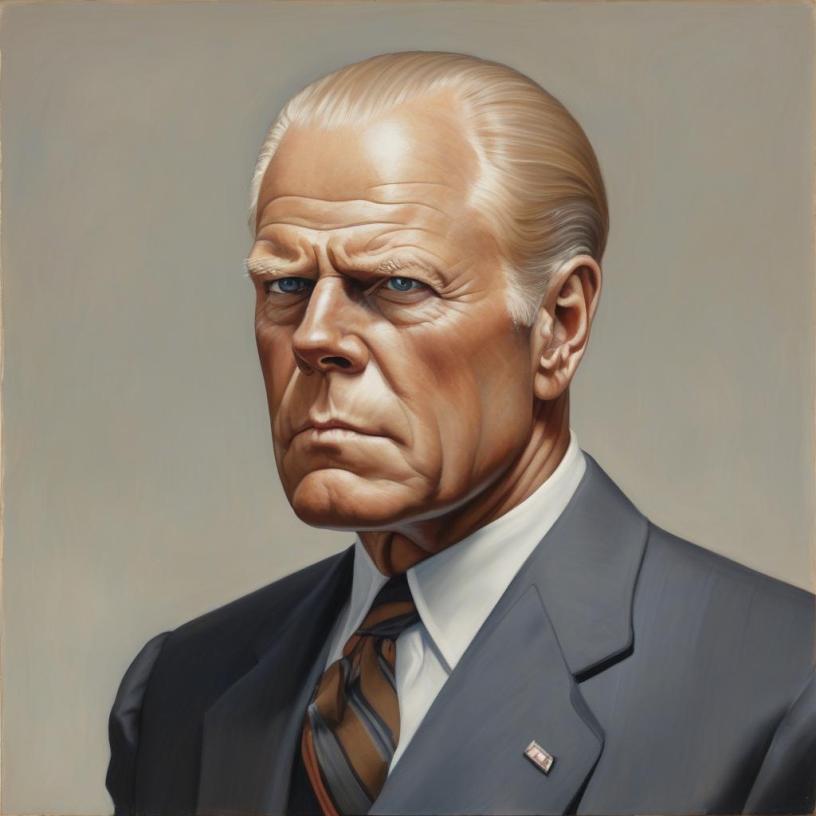
📅 May 1, 11:00 AM – Gerald Ford’s Pardon of Nixon (1974)
You ever make a mistake so bad the whole country had to live with it for decades? No? Congratulations, you’re already ahead of several people who’ve sat behind the Resolute Desk. This May, at precisely 11:00 AM each day, we’re going to open the dusty filing cabinet of American history, pull out the yellowed folders marked “DO NOT OPEN—NATIONAL SHAME,” and remind ourselves just how low the Oval Office can go.
We call it #MayhemInMay—a 31-day countdown of the worst presidential screwups, ranked from the “Eh, that wasn’t great” all the way to “Dear God, how did we let this happen?” Each day, we’ll deliver one facepalm-inducing blunder, served with a garnish of sarcasm and a historical side-eye. Because if we’re going to relive this parade of failure, we might as well laugh through the tears.
Day One: Gerald Ford and the Great American Mulligan
Let’s begin gently—with Gerald Ford, the only president never elected to national office who still managed to make half the country groan in unison. In 1974, he gave Richard Nixon a full, unconditional pardon for Watergate before anyone even had a chance to ask, “Hey, should we maybe read him his rights first?” (Smith, 1995).
Ford’s excuse? He said he wanted to “heal the nation.” Which, translated from politician into English, means: “I really don’t want to spend the next six months watching Nixon squirm on television while I try to run the country.” And okay, maybe he had a point. But healing the nation by avoiding justice is like curing a hangover by punching the bartender—temporarily satisfying, but you’re still going to puke later.
Some folks praised him for it. Others wanted to throw him down the steps of Air Force One. One guy in particular, a certain Mr. Chevy Chase, turned the Ford presidency into a comedy sketch that lasted longer than Ford’s own White House stay. I mean, say what you want about Gerald, but he gave Saturday Night Live a career launchpad. That’s gotta count for something, right? (Zelizer, 2022).
Still, a pardon is no joke. What Ford did was set a dangerous precedent: if you’re powerful enough, the consequences don’t apply. It’s the American version of Monopoly’s “Get Out of Jail Free” card—except the banker is the President, and the entire country is stuck paying rent on Baltic Avenue.
Ford’s defenders argue he spared us the agony of a drawn-out trial. And sure, maybe it saved the nation from further embarrassment. But when your neighbor burns down your garage, you don’t give him a hug and a Hallmark card. You call the fire department and make sure he’s not allowed near matches again.
Besides, the public trust took a hit that day—and unlike Nixon’s tapes, there’s no easy way to rewind that damage. Once you tell the American people that laws apply differently depending on your mailing address, it’s tough to convince them you’re all about justice and equality again. And let’s be honest: the only thing Nixon really missed was a jailhouse memoir titled Tricky Dick and the Big House.
So that’s where we begin. Not with war, not with economic collapse, but with a neat little signature on a pardon that turned justice into a punchline. And it set the tone for so many disasters that followed. Because once you teach the class bully he can steal lunch money and still get a handshake from the principal, don’t be surprised when he runs for student council.
But don’t worry—Ford’s move might be the softest screwup on our list. What follows over the next 30 days will make you laugh, cry, and possibly want to throw your civics textbook into Lake Michigan. We’ll revisit presidents who ignored pandemics, launched pointless wars, tanked economies, and treated civil liberties like cocktail napkins.
So buckle up, patriots. May is going to be a bumpy ride down Memory Lane—with potholes, road rage, and the occasional flaming dumpster of democracy. We’ll be back tomorrow at 11:00 sharp, ready to unpack mistake #30. Spoiler alert: It doesn’t get better before it gets worse.
References
Smith, R. N. (1995). Thomas E. Dewey and His Times. Simon & Schuster.
Zelizer, J. E. (2022). Fault Lines: A History of the United States Since 1974. W. W. Norton & Company.
 Occupy 2.5