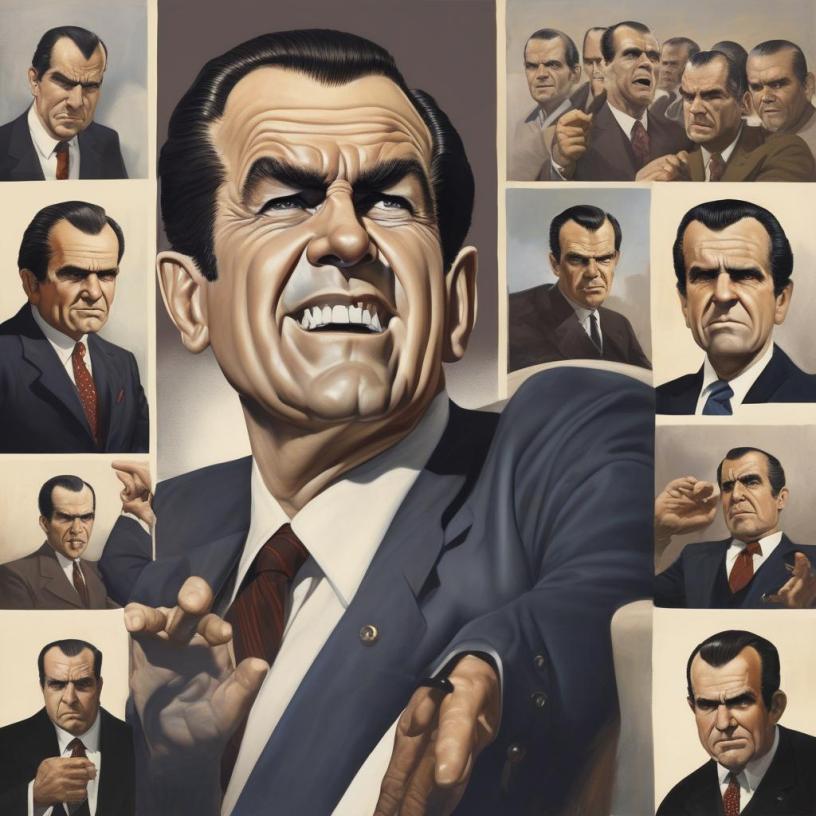
“It’s not the crime, it’s the cover-up. Oh, wait, never mind, it’s both.”
Ah, Richard Nixon. The man who decided that subverting democracy and then lying about it was a great idea, as long as you could keep the tapes rolling. His legacy, marred by the Watergate scandal, is a tale of hubris, paranoia, and an unfathomable level of incompetence.
Watergate didn’t start as a scandal — it started as a break-in at the Democratic National Committee headquarters, conducted by members of Nixon’s re-election campaign. Just a bit of harmless espionage, right? But instead of just letting the whole thing slide (like any sensible criminal would), Nixon did the absolute worst thing possible: he tried to cover it up.
And what followed was a series of missteps, lying to the public, firing anyone who got too close to the truth, and a deep dive into the murky waters of political scandal. The media caught on, and suddenly, it wasn’t just about a break-in. It was about corruption at the highest level of government, illegal surveillance, and, of course, the resignation of a president in disgrace.
By the time it was over, Nixon had been cornered into resigning in August 1974, the first president in U.S. history to do so. But don’t think for a moment that the damage ended with Nixon. Watergate forever altered the American public’s trust in its government, establishing a level of skepticism about the presidency that lingers to this day (Bernstein & Woodward, 1974).
In the end, Nixon’s mistake wasn’t just the crime — it was thinking he could get away with it by playing dirty and hiding the evidence. The scandal tore apart the fabric of American politics, setting a precedent for future presidents who would live under the shadow of Nixon’s corrupt legacy.
And as for the infamous tapes? Well, the ones that ultimately caught him in his web of lies? Let’s just say they make the “I have a bad feeling about this” line from Star Wars look pretty tame.
 Occupy 2.5