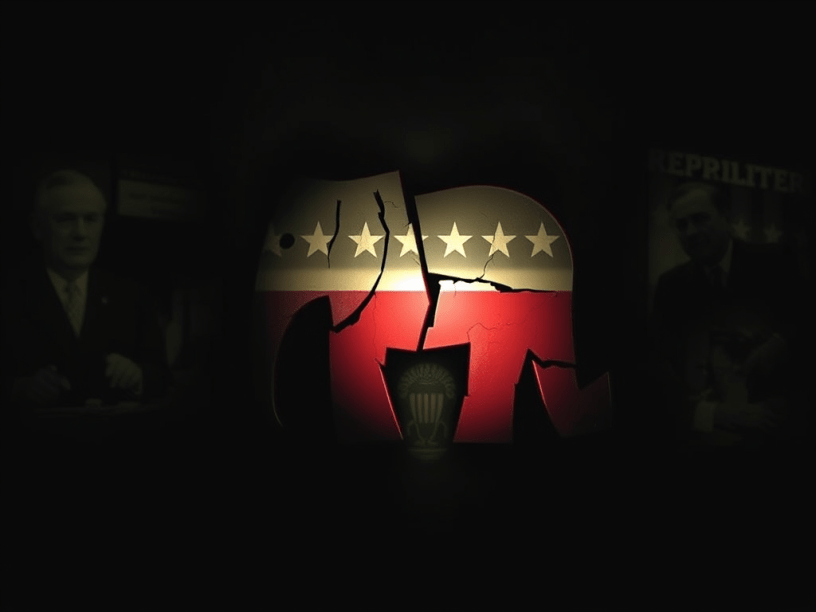
Tracing the Roots of Fascism in American Politics
In recent years, many political analysts and historians have pointed to the evolution of the Republican Party, suggesting it has veered dangerously close to authoritarianism and fascism. The term “fascism” often elicits strong reactions, but understanding its manifestations in the Republican Party requires a careful examination of historical events, ideologies, and leadership decisions. This article seeks to delineate significant moments when the Republican Party began to show signs of fascistic tendencies, highlighting how these trends intensified over decades and culminated in contemporary American politics.
The Eisenhower Era: Seeds of Discontent
The story begins during the presidency of Dwight D. Eisenhower from 1953 to 1961. While often viewed as a stabilizing figure, Eisenhower’s administration grappled with McCarthyism—a movement marked by aggressive anti-communist sentiment that encouraged paranoia and repression. Eisenhower’s reluctance to confront Senator Joseph McCarthy directly allowed an atmosphere of fear to permeate American political discourse. The unchecked aggression toward dissenting voices foreshadowed later trends within the party, as powerful factions sought to eliminate opposition rather than engage in debate.
Nixon and the Watergate Scandal: Erosion of Trust
Fast forward to Richard Nixon’s presidency, which is often recalled for its significant foreign policy accomplishments but is forever marred by corruption and the Watergate scandal. The Nixon administration exemplified a troubling shift toward authoritarian practices, including the normalization of deceit and the abuse of executive power. His administration’s attempts to undermine democratic processes, notably through espionage against political opponents, highlighted an unsettling willingness to sidestep ethical boundaries in pursuit of power. The fallout from Watergate not only deepened public distrust in government but also reflected an underlying trend within the Republican Party toward increasingly autocratic governance.
The Reagan Paradox: Economic Hardship and Rhetoric
With the rise of Ronald Reagan in the 1980s, the Republican Party shifted further toward an ideology that often prioritized the wealthy under the guise of trickle-down economics. While his rhetoric celebrated individual freedom, the economic policies of “Reaganomics” disproportionately benefited the rich, exacerbating wealth inequality and disenfranchising vast segments of the population. This concentration of wealth and power is often linked to fascistic principles, where the elite govern at the expense of the common people. During Reagan’s presidency, the seeds of division, concentrated power, and rhetoric that favored the few began to take root, offering a glimpse into a troubling future for American democracy.
The Bush Administration: Expansion of Executive Powers
The events of September 11, 2001, served as a pivotal moment for the Republican Party under President George W. Bush. In the aftermath of the attacks, the government expanded its surveillance capabilities, effectively eroding civil liberties in the name of national security. The passage of the PATRIOT Act marked a significant shift toward a more authoritarian state, legitimizing invasive tactics justified by fear. The Bush administration’s invocation of fear to garner support for prolonged military campaigns abroad illustrated a recurring tactic that has characterized fascistic regimes: leveraging national crises for expanded governmental control.
The Critical Turning Point: Trump’s Presidency
The election of Donald Trump in 2016 represented a watershed moment for the Republican Party, drawing upon populist sentiment and anti-establishment rhetoric that resonated with many Americans feeling disillusioned by traditional politics. Trump’s administration was marked by a sharp deviation from democratic norms, characterized by two impeachments and repeated attempts to delegitimize electoral outcomes. His incendiary comments leading up to the January 6, 2021, Capitol insurrection prompted many to draw parallels between his rhetoric and tactics employed by historical fascist movements.
The storming of the Capitol served as a powerful reminder of the extent to which extremist factions within the party had gained influence, celebrating violence against governmental institutions. Trump’s repeated claims of election fraud gave rise to a perilous climate where loyalty to the party superseded adherence to democratic principles, raising alarm bells about the potential for fascist ideologies to take root within the Republican Party.
Conclusion: An Ongoing Struggle for Democracy
Today, as the Republican Party grapples with its identity amid internal divisions, the specter of authoritarianism looms large. Parallels drawn to fascism must be examined critically, reflecting on the history and the myriad factors that led to this disquieting moment in American politics. While some members of the party cling to traditional values, others embrace a more radical and often disconcerting vision that threatens democratic norms, amplifying inequality, division, and escalating polarization.
Understanding the Republican Party’s journey toward these fascistic tendencies is critical for safeguarding democracy. Civic engagement, open dialogue, and mindful leadership are essential to counter these authoritarian impulses. The American political landscape is at a crossroads—one that will ultimately determine whether the Republic can remain true to its foundational principles of liberty, equality, and justice for all.
A Call to Action
As citizens, it is our responsibility to remain vigilant and actively engage in the democratic process. In light of past transgressions and the ongoing struggle against authoritarianism, it is crucial to advocate for transparency, accountability, and a renewed commitment to civic engagement. Voter participation, community organizing, and fostering informed public discourse can help ensure that the mistakes of history are not repeated.
Lessons from the past should guide the present and future; thus, understanding the Republican Party’s trajectory offers insights into guarding against the rise of authoritarian tendencies. History has shown how political rhetoric can shift from benign to menacing, and it is incumbent upon all Americans to participate in the shaping of a democratic society that elevates the voices of many rather than the few.
In conclusion, the road ahead requires a collective effort from all corners of the political spectrum. It is time to reclaim the principles of democracy and ensure that they are upheld for generations to come. The fall into fascism remains a cautionary tale, reminding us that the vigilance of a free and engaged citizenry is the best defense against the tides of tyranny. As we reflect on our political climate, let us strive for a future that embodies the ideals of justice, equity, and the democratic freedoms that define our nation.
 Occupy 2.5