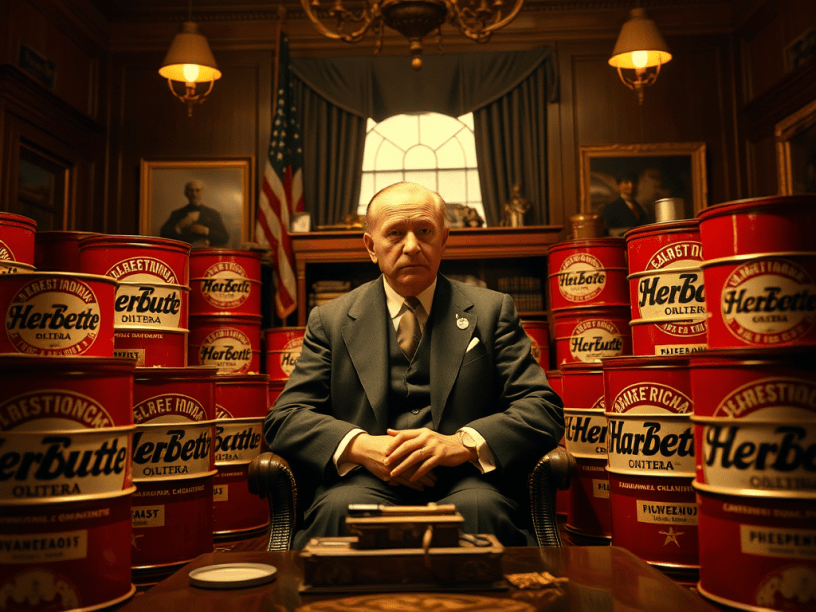
“I think I was elected to do nothing.”
Warren G. Harding had all the right qualities to be president: a booming voice, a winning smile, and a complete lack of any particular competence in office. His presidency would forever be synonymous with the Teapot Dome Scandal, a tale so absurd that it’s almost impossible to imagine it happening in any other era.
The story goes like this: Harding’s Secretary of the Interior, Albert Fall, had a genius idea: instead of letting the federal government control oil reserves on public land, why not lease them to private companies? A nice little deal with oil executives, and he even let them have the rights to reserves in Teapot Dome, Wyoming, hence the name. It was a classic case of “let’s scratch each other’s backs” — Fall would get bribes, and the companies would get access to cheap, public land oil. What could possibly go wrong?
Well, everything. Once the scheme was uncovered, it was revealed that Fall had received bribes totaling over $400,000 (equivalent to millions today). That’s a lot of cash to stuff in your mattress, but hey, for a guy who had somehow wriggled his way into a key position in the government, it was a pretty sweet gig. The only problem? It was highly illegal.
The scandal was so juicy it made Harding’s presidency infamous. But here’s the kicker: Harding didn’t live long enough to see his disgrace truly play out. He died of a heart attack in 1923, leaving behind a trail of scandals and unanswered questions. Fall was convicted of bribery and became the first cabinet member to go to prison. The oil companies, though? They mostly walked away unscathed, though the damage to public trust was done.
In hindsight, Harding’s administration feels like a comedy of errors. He was surrounded by crooks, and while he was obviously oblivious to what was happening under his nose, it was his lack of leadership — or basic competence — that allowed this whole mess to unfold. Harding didn’t just fail to stop corruption, he practically gave it a seat at the table.
The Teapot Dome scandal is a clear reminder of the dangers of weak leadership, the potential for public resources to be looted by insiders, and the harm done when political connections trump ethics and responsibility. The fact that Harding was seen as a tragic figure who, while charming, could barely govern, says more about the times than the man himself. He didn’t even get to see the full weight of his failings. He died, leaving a scandal that would remain a dark chapter in American history.
📝 Editor’s Note:
If you look closely, the Teapot Dome scandal tells a story not just about corruption, but about how much damage can be done when leadership is fundamentally lazy, self-serving, and disengaged. When we say these people “lead,” are we sure they ever even tried to govern with honor? They certainly didn’t act like it.
📚 References:
Baker, C. (1995). The Teapot Dome Scandal: How Big Oil Bought the Harding White House. St. Martin’s Press.
Schmidt, D. L. (1990). The Political Legacy of Warren G. Harding. University of Chicago Press.
 Occupy 2.5