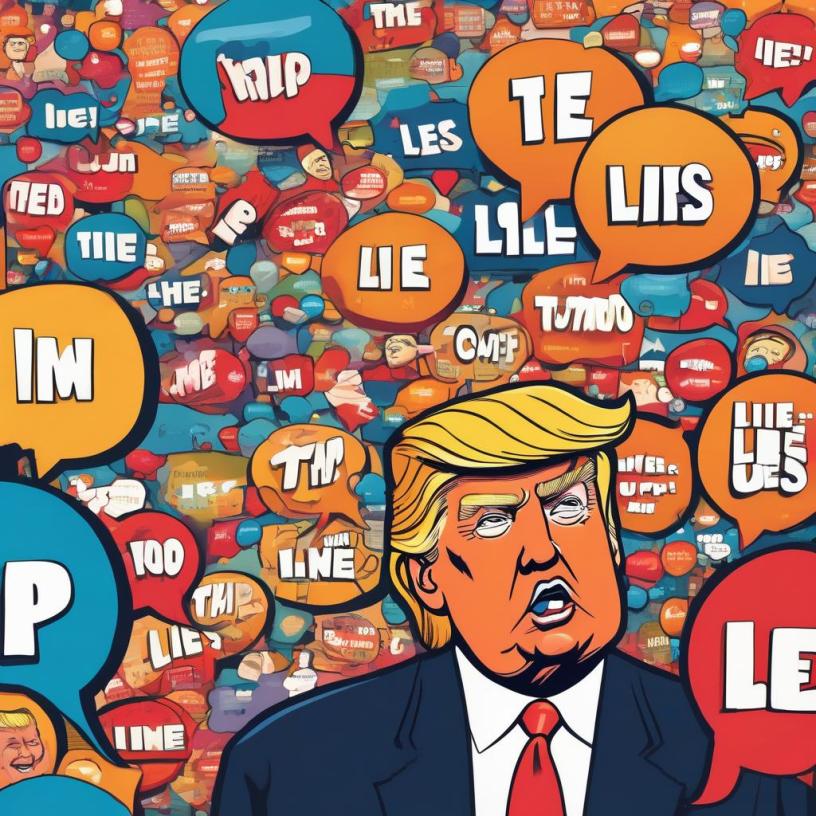
In the political landscape of the United States, the issue of truth and accountability has taken a drastic turn, especially under the presidency of Donald Trump. From Stephen Colbert’s commentary reflecting a surreal environment filled with “useful lies” and applauded by “useless idiots” to the systematic analysis of lies and misinformation presented by various media outlets, it becomes essential to unpack the reasons behind Trump’s incessant dishonesty and the potential ramifications for the nation.
The Nature of Lies
Colbert’s summation of Trump’s presidency hints at a deeper truth: Trump frequently lies not just for personal gain but as part of a larger political strategy. According to James P. Pfiffner in “The Lies of Donald Trump: A Taxonomy,” Trump differentiates between trivial lies, exaggerations, and egregious falsehoods, often using them to sway public opinion. His tendency to exaggerate or fabricate claims, such as crowd sizes during his inauguration, sets a president that operates outside the confines of traditional political norms.
This strategic manipulation of truth, as noted by Daniel Dale of CNN, creates a separate reality for his supporters, fostering an environment where facts become malleable and subjective. The historical context provided by Pfiffner shows that while previous presidents have also lied, the sheer volume and nature of Trump’s falsehoods stand apart, leading to a distinct breakdown in public trust.
Underlying Reasons for Trump’s Lies
Several key reasons contribute to why Trump lies and seemingly gets away with it:
- Loyalty and Base Manipulation: Trump’s false claims often resonate with his supporters’ beliefs and grievances, providing them with a sense of identity and purpose. This phenomenon is discussed in various articles, with reports indicating a significant portion of his base believes in his absurd assertions, like voter fraud claims and exaggerated economic reports, without scrutiny.
- Political Strategy: By sowing doubt about established facts and demeaning credible sources—an idea echoed across multiple sources such as NBC News and AP Fact Check—Trump effectively discredits the media, creating an echo chamber that shields his narrative. His callous disdain for accurate reporting fosters an environment where misinformation thrives.
- Cognitive Bias and Misinformation: Research highlighted by Pfiffner shows that lies often become entrenched in the public psyche, making corrections ineffective. Many individuals remain steadfastly attached to false beliefs, which serves to perpetuate Trump’s influence and authority among his followers.
The Damage to the Nation
The consequences of Donald Trump’s lies are profound and multifaceted:
- Erosion of Trust: As noted by historians and political analysts, lying at the presidential level erodes the foundational trust required for democracy. A population unable to agree on basic facts can no longer engage in rational discourse. This undermines decision-making processes and fosters polarized views that benefit those in power while alienating the electorate.
- Ignorance and Willful Blindness: Prevailing misinformation leads to willful ignorance, where individuals refuse to acknowledge established facts or reject truths due to cognitive dissonance. This promotes a culture of skepticism toward science, media, and other traditional authorities, as seen in Trump’s handling of the COVID-19 pandemic and other pressing national issues.
- Civic Responsibility: As articulated through various analyses, it is imperative that citizens recognize the importance of distinguishing between trustworthy information and falsehoods. An understanding of civic responsibility demands acknowledgment that “thinking you know something that you don’t is stupid.” Engaging with misinformation is not a benign choice; it directly contributes to corruption and injustice within governing systems.
Conclusion: The Path Forward
The prevalence of Trump’s lies serves as a stark reminder of the fragility of democratic institutions when leaders prioritize power over truth. Recognizing what is right and what is not is essential for the health of any democracy. Civic education must encourage critical thinking and ethical engagement, reminding individuals that the acceptance of lies compromises not only personal integrity but collective responsibility.
As American society wrestles with the consequences of a presidency marked by relentless dishonesty, restoring a commitment to truthfulness and accountability is key to preserving the nation’s democratic foundations. Only by empowering citizens to demand the truth and reject corruption can the cycle of willful ignorance be disrupted, positioning the nation toward a more transparent and just society.
It is imperative that the call for integrity rings loudly: “Remove Donald Trump from office!” This phrase encapsulates the need for voters to prioritize honesty and accountability in leadership, fostering a political environment where truth prevails and democracy can be revitalized. Together, as informed citizens, we must strive to hold our leaders accountable and reclaim the moral authority essential for guiding our nation forward.
Sources:
- “Stephen Colbert on Trump’s Speech: ‘Filled with Useful Lies and Applauded by Useless Idiots.’” The Guardian, 5 Mar. 2025, http://www.theguardian.com.
- Hotchkiss, Jon. “Why Do Trump Voters Believe His Lies? It’s Not Because They’re Stupid.” The Huffington Post, 27 Mar. 2017, http://www.huffpost.com.
- Smith, David. “‘We’re Watching Mass Delusion Happen’: Trump’s Return to White House Brings Cascade of Lies.” The Guardian, 26 Jan. 2025, http://www.theguardian.com.
- Beattie, Geoff. “Why Does Donald Trump Tell Such Blatant Lies?” The Conversation, 21 Oct. 2024, http://www.theconversation.com.
- Dale, Daniel. “Analysis: Donald Trump’s Campaign of Relentless Lying.” CNN, 1 Nov. 2024, http://www.cnn.com.
- Goldin, Melissa. “Fact Focus: A Look at False and Misleading Claims Made by Trump During His First Week Back in Office.” Associated Press, 24 Jan. 2025, http://www.apnews.com.
- Pfiffner, James P. “The Lies of Donald Trump: A Taxonomy.” The Trump Presidency and Executive Power, edited by Charles Lamb, Palgrave Macmillan, forthcoming 2019.
- Timm, Jane C. “Trump versus the Truth: The Most Outrageous Falsehoods of His Presidency.” NBC News, 31 Dec. 2020, http://www.nbcnews.com.
- Goldin, Melissa. “A Fact-Check of the Claims Made by Trump During His Presidency.” Associated Press, 29 June 2020, http://www.apnews.com/fact-check.
- “Donald Trump’s Falsehoods: A Comprehensive Review of His Claims.” The Washington Post, 23 Nov. 2020, http://www.washingtonpost.com/politics/trump-falsehoods.
 Occupy 2.5