By Staff Correspondent
April 21, 1961
This week, America faced a major setback in its efforts to stop communism in the Western Hemisphere. The Bay of Pigs invasion, a plan to remove Cuban leader Fidel Castro, ended in failure. President John F. Kennedy approved the mission, but a series of poor choices led to disaster.
The plan began under President Eisenhower. The CIA trained Cuban exiles to invade Cuba and inspire a revolt against Castro. President Kennedy, wanting to keep U.S. involvement secret, changed parts of the plan. He canceled key airstrikes meant to destroy Castro’s air force. This left the invaders without proper air support (History.com, 2021).
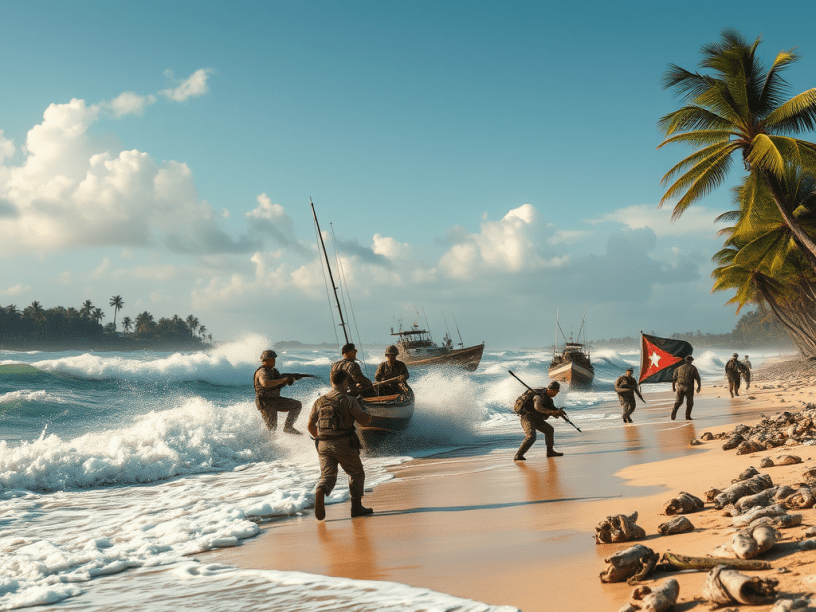
On April 17, 1961, about 1,400 exiles landed at the Bay of Pigs. They faced strong resistance from Castro’s forces. The landing site was poorly chosen, with coral reefs damaging boats and slowing the attack. Cuban planes sank supply ships, leaving the invaders without food or ammunition (JFK Library, n.d.).
The invasion quickly failed. Over 100 men were killed, and nearly 1,200 were captured. Instead of weakening Castro, the failed attack strengthened his position and pushed him closer to the Soviet Union (Miller Center, n.d.).
President Kennedy took full responsibility, saying, “Victory has a hundred fathers and defeat is an orphan” (JFK Library, n.d.). While he admitted his mistake, the failure hurt America’s reputation and raised doubts about his leadership.
A Warning to Future Leaders
To any future young president: please learn from this. The Bay of Pigs shows the dangers of poor planning and ignoring expert advice. National security decisions must be made carefully, with clear thinking and strong leadership. Don’t repeat these mistakes.
References
- History.com Editors. (2021). Bay of Pigs Invasion. HISTORY. https://www.history.com/this-day-in-history/April-17/the-bay-of-pigs-invasion-begins
- John F. Kennedy Presidential Library and Museum. (n.d.). The Bay of Pigs. https://www.jfklibrary.org/learn/about-jfk/jfk-in-history/the-bay-of-pigs
- Miller Center. (n.d.). Epic Misadventure. https://millercenter.org/the-presidency/educational-resources/epic-misadventure
 Occupy 2.5