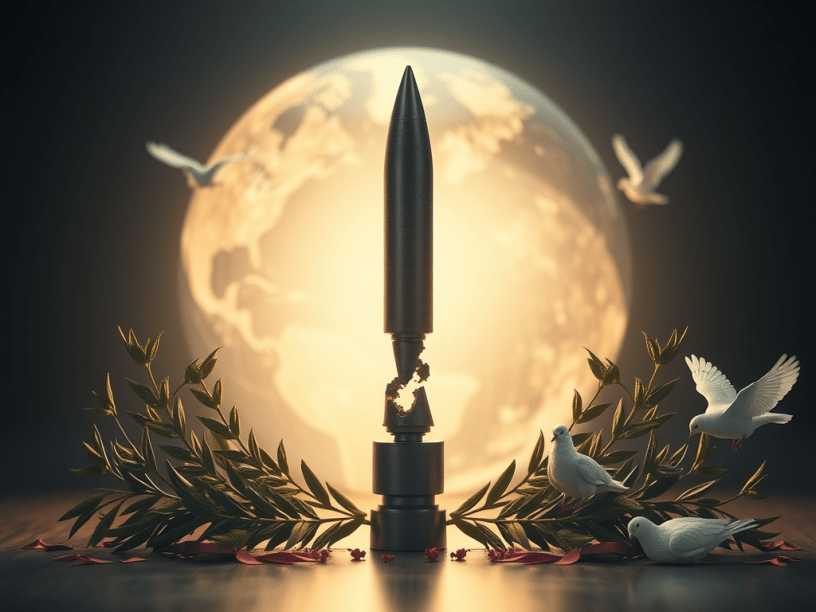
Nuclear weapons pose a significant threat to global security. Currently, nine countries possess about 12,100 nuclear warheads. Russia and the United States hold approximately 90% of this arsenal. Despite a history of arms reduction, these two nations continue to modernize their nuclear capabilities, creating a precarious balance of power.
The Treaty on the Prohibition of Nuclear Weapons represents a hopeful development in the pursuit of disarmament. This treaty aims for a world without nuclear arms, encouraging dialogue among nations. Events like the International Day for the Total Elimination of Nuclear Weapons foster collaboration and raise public awareness about the dangers of nuclear proliferation.
Transparency regarding nuclear arsenals is crucial. The United States has taken steps to disclose information about its stockpile. This move promotes accountability and encourages the public to engage in discussions about nuclear policy. When citizens are informed, they are better positioned to advocate for change.
Dismantling retired nuclear weapons is another important accomplishment. While the process is slow, it demonstrates a commitment to reducing the global nuclear threat. This gradual disarmament is akin to unraveling a complex knot; it requires time and effort but is essential for long-term stability.
The rise of advanced technologies introduces new challenges. The U.S. is examining the proliferation risks associated with high assay low enriched uranium (HALEU). Ensuring that technological advancements bolster rather than undermine nuclear security is vital in our rapidly changing world.
The ongoing situation with North Korea underscores the delicate nature of nuclear deterrence. Each missile test escalates tensions and raises the stakes for all involved. Additionally, the involvement of criminal organizations in nuclear trafficking highlights the vulnerabilities in our security frameworks.
To halt this dangerous cycle, unity and concerted action are essential. It is imperative that we support disarmament initiatives and foster global collaboration. Treaties like New START must be upheld and strengthened to mitigate the risks associated with nuclear weapons.
Active engagement with civil society is critical. Supporting organizations like ICAN can amplify the call for disarmament. Every signed petition, community discussion, and awareness campaign contributes to a broader movement for change.
Rethinking our approach to nuclear weapons is necessary. We should strive to view them not as symbols of power but as relics of a bygone era. By advocating for a nuclear-free future, we can challenge the normalization of these weapons.
It is time for the international community to demand accountability from its leaders. Through sustained activism and cooperation, we can create a world that prioritizes peace and security, stepping off the metaphorical treadmill of nuclear escalation.
Sources:
- Kristensen, Hans M., Matt Korda, Eliana Johns, and Mackenzie Knight. “United States Nuclear Weapons, 2024.” Bulletin of the Atomic Scientists, vol. 80, no. 3, 2024, pp. 182–208. DOI: https://doi.org/10.1080/00963402.2024.2339170.
- Kristensen, Hans M., Matt Korda, Eliana Johns, and Mackenzie Knight. “United States Nuclear Weapons, 2025.” Bulletin of the Atomic Scientists, vol. 81, no. 1, 2025, pp. 53–79. DOI: https://doi.org/10.1080/00963402.2024.2441624.
- “Nuclear Weapon.” Encyclopedia Britannica, Encyclopaedia Britannica, Inc., 21 Feb. 2025, http://www.britannica.com/science/nuclear-weapon.
- United Nations. “International Day for the Total Elimination of Nuclear Weapons.” United Nations, http://www.un.org/en/observances/international-day-total-elimination-nuclear-weapons.
- International Campaign to Abolish Nuclear Weapons. “Nuclear Ban Week 2025.” ICAN, http://www.icanw.org/nuclear-ban-week-2025.
- Davenport, Kelsey, and Daryl G. Kimball. “U.S. Says Pakistan Developing Long-Range Missiles.” Arms Control Today, Jan.-Feb. 2025.
- McAllister, Christina, and Braden Holt. “Nuclear Security News and Member Updates Roundup, January 2025.” Henry L. Stimson Center, 4 Feb. 2025, http://www.stimson.org/nuclear-security-news-update-january-2025.
- Kristensen, Hans M., and Matt Korda. “The 2022 Nuclear Posture Review: Arms Control Subdued by Rivalry.” FAS Strategic Security Blog, 27 Oct. 2022, http://www.fas.org/blogs/security/2022/10/2022-nuclear-posture-review/.
- Kristensen, Hans M., and Matt Korda. “Increasing Evidence That the US Air Force’s Nuclear Mission May Be Returning to UK Soil.” FAS Strategic Security Blog, 28 Aug. 2023, http://www.fas.org/publication/increasing-evidence-that-the-us-air-forces-nuclear-mission-may-be-returning-to-uk-soil/.
 Occupy 2.5