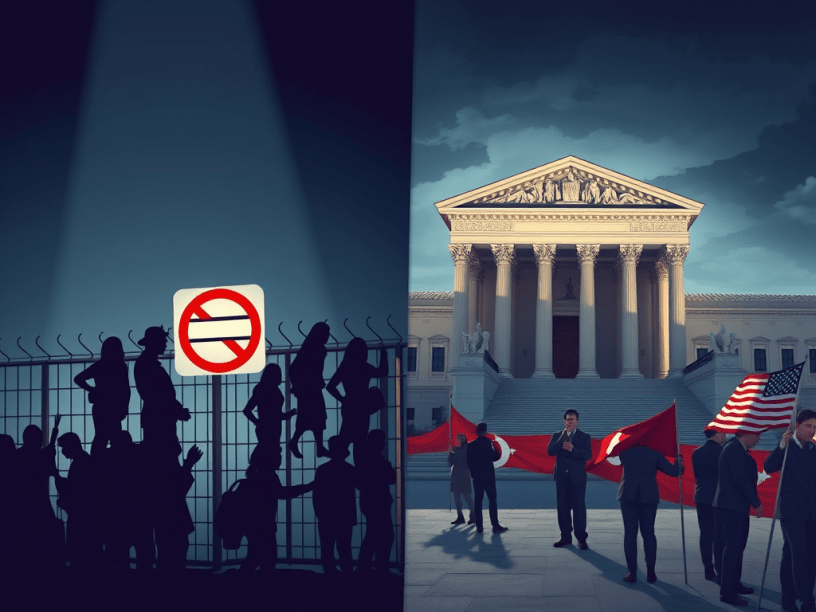
On June 26, 2018, President Donald Trump’s administration rolled out its revised Muslim ban—officially known as the Travel Ban 2.0—which targeted several predominantly Muslim countries. This was an extension of Trump’s original executive order from early 2017, which was blocked by federal courts for being discriminatory. The second attempt faced a similar backlash but ultimately passed through the Supreme Court in a 5-4 ruling in June 2018.
However, the victory was short-lived. The policy was fraught with inconsistencies and legal challenges, leading to a complex and evolving series of revisions. The original list of countries expanded, revised, and shifted as courts scrutinized the ban. What started as a sweeping, blanket ban on citizens from specific countries morphed into a fragmented set of restrictions. By the time the ban was fully implemented, some countries were removed from the list, while others remained under varying degrees of restriction.
The ban’s legality was hotly debated, but the underlying implications of the policy were clear: it continued to promote a “them vs. us” mentality, further deepening divisions within the U.S. While Trump touted it as a national security measure, critics argued it was a thinly veiled attack on Islam and a violation of constitutional rights.
By the time the dust settled, what Trump had hoped would be a firm stance against terrorism had instead created an enduring legal and political headache. The travel ban’s legacy remains a reminder of Trump’s heavy-handed, often flawed approach to policymaking—one that came with severe backlash both domestically and internationally.
Why did you vote for him again in November 2024?
 Occupy 2.5