I honestly can’t believe this is where we are right now!
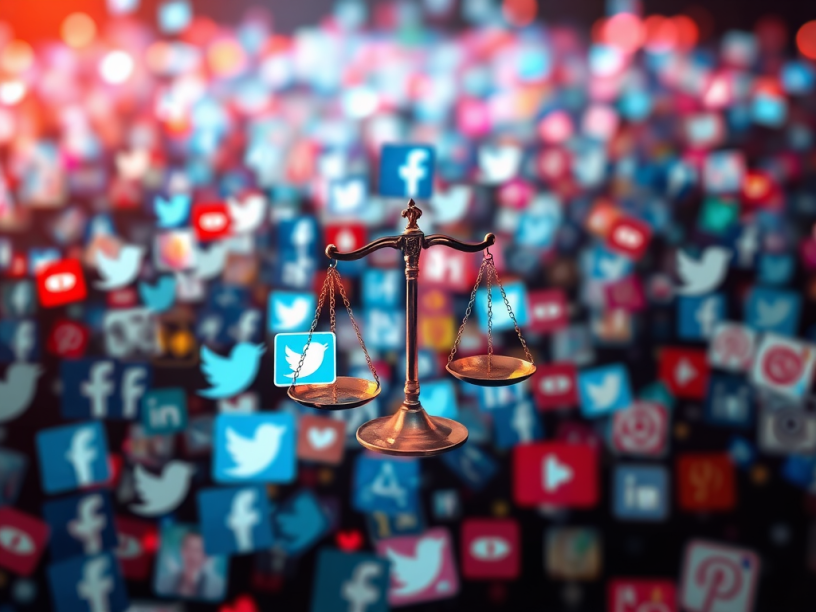
In an age dominated by rapid information consumption, polarized politics, and social media echo chambers, the line between right and wrong has increasingly become blurred. Whether on Twitter, Facebook, or emerging platforms like Bluesky, the ability to discern fact from fiction, truth from manipulation, and ethical from unethical behavior has become more challenging. But why is this happening, and why does it seem like some people have lost the ability to tell the difference between right and wrong?
- Echo Chambers and Confirmation Bias
Social media platforms are built around algorithms that prioritize engagement, often by reinforcing existing beliefs. When people only interact with content that aligns with their worldview, they end up trapped in echo chambers, where differing opinions are not only silenced but vilified. Over time, this creates a skewed version of reality that distorts people’s sense of what’s morally and ethically right. People are no longer exposed to diverse perspectives, and instead, they live in a world where their opinions are constantly validated, regardless of their accuracy or morality.
- Political Polarization and Moral Relativism
In a politically polarized environment, where right-wing and left-wing ideologies are entrenched, many find themselves questioning what is objectively right or wrong. When political affiliation becomes synonymous with personal identity, people begin to defend their side, even when it’s clear that ethical lines have been crossed. This shift towards moral relativism—where truth becomes subjective and dependent on one’s political or social affiliations—creates an environment where people justify actions they otherwise might have condemned, simply because they align with their side of the argument.
- The Decline of Critical Thinking
With the overwhelming influx of information at our fingertips, it’s become harder for individuals to engage in deep, thoughtful reflection. In many cases, soundbites, viral memes, and clickbait headlines replace thoughtful analysis. This quick consumption of surface-level content makes it difficult for individuals to critically engage with important issues. When people rely more on their feelings and personal biases than objective reasoning, the line between right and wrong becomes harder to discern.
- Social Media’s Reward System
Platforms like Bluesky thrive on the pursuit of likes, retweets, and comments. This often leads to a reinforcement of extreme opinions or controversial takes, since they garner more attention than nuanced or moderate viewpoints. In this digital environment, people may be incentivized to push the boundaries of what’s socially acceptable in order to gain popularity or validation from their followers. The pursuit of online fame can lead to moral compromises, making it harder for individuals to recognize when they are crossing ethical lines.
- Dehumanization and “Othering”
As political discourse becomes more divisive, we increasingly see the dehumanization of individuals with differing viewpoints. The “othering” process involves seeing those who disagree with you as not only wrong, but as inherently bad, dangerous, or unworthy of empathy. When this happens, it becomes easier to justify actions that might otherwise be seen as wrong, simply because the “other side” is viewed as undeserving of basic moral consideration.
- Moral Relativism and Information Overload
With access to so many perspectives, some people may feel overwhelmed by the complexity of moral questions and uncertain about what is right or wrong. In an age where every opinion can be debated endlessly, moral relativism—the idea that there are no absolute truths—becomes more tempting. If you can find an argument or perspective to support any view, it may feel like everything is just a matter of personal opinion rather than an objective truth.
As social media continues to shape our lives and our political discourse, it’s crucial for individuals to engage with diverse perspectives, develop critical thinking skills, and foster empathy. Without these tools, the line between right and wrong may become even more difficult to navigate. In a world where the truth seems to be malleable, it’s up to each person to decide where they stand and to question the narratives they’re being fed, both online and offline.
 Occupy 2.5