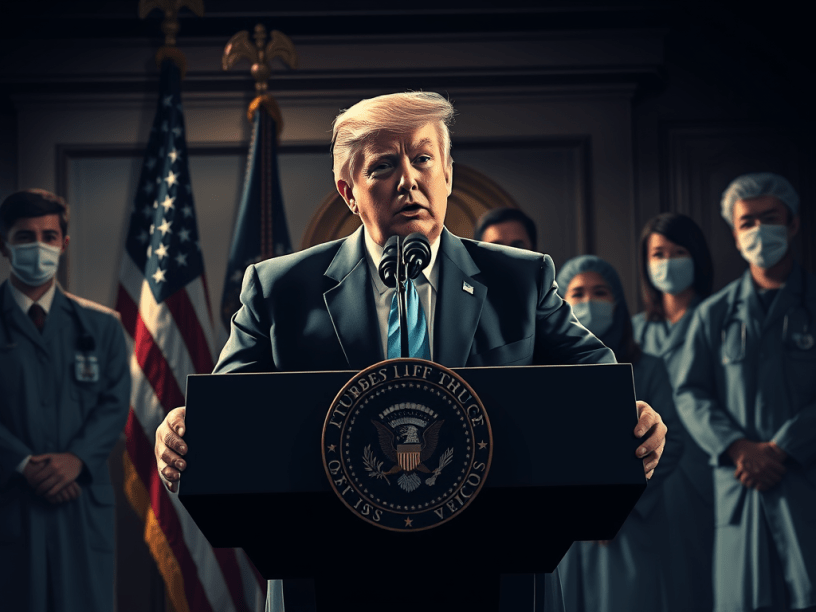
In the spring of 2020, as COVID-19 was spreading uncontrollably across the globe, President Donald J. Trump made a stunning announcement: the United States would freeze its funding to the World Health Organization (WHO). On April 14, 2020, with over 100,000 Americans already infected and thousands dead, Trump accused the WHO of “severely mismanaging and covering up” the outbreak.
This was not the move of a leader focused on saving lives. It was a distraction, a scapegoat to shift blame away from the White House’s sluggish and confused response to the virus. Instead of uniting the world’s largest public health donors around coordinated pandemic efforts, Trump chose to pull the plug on international collaboration—right when it was needed most.
The U.S. was the largest contributor to WHO’s budget, accounting for nearly 15% of its funding. Trump’s decision to halt support didn’t just hurt Americans; it affected disease tracking, vaccine research, and emergency aid in developing countries that rely on WHO infrastructure. Global health leaders condemned the move as reckless and politically motivated.
Even as scientists pleaded for unity, Trump withdrew further—announcing on May 29, 2020, that the U.S. would formally begin the process of leaving the WHO. That withdrawal would later be reversed by President Biden in 2021, but the damage to global trust was done.
During a once-in-a-century health crisis, Trump chose nationalism over science, isolation over cooperation. The consequences were global—and deadly.
Why did you vote for him again in November 2024?
 Occupy 2.5