Analyzing the Preamble of the Declaration of Independence in the Context of Contemporary America
The Preamble to the Declaration of Independence is not only a foundational text in American history, but it also encapsulates the revolutionary ideals of individual rights, government responsibility, and the principles of justice that continue to resonate in modern society. As we reflect on the Preamble’s key ideas, it is critical to consider their relevance in light of current events in the United States, particularly under the leadership of the 47th President.
“When in the Course of human events, it becomes necessary for one people to dissolve the political bands which have connected them with another…”
This opening line emphasizes the gravity of the decision to separate from a governing power. It acknowledges that, while such a separation is significant and fraught with consequence, there are times when it is not only necessary but justified. Today, many Americans feel disenfranchised or disconnected from their government, believing that their voices and needs are being ignored. With rising division and public distrust in leadership, the notion that “political bands” may need to be dissolved is seen by some as increasingly relevant.
Under the current presidential administration, critiques regarding policies, actions, or ethical considerations have sparked significant public discourse. Many citizens feel that the President’s actions contribute to a government that does not represent their interests. This sense of disconnect compels advocates to demand change, pushing them to echo the sentiment that sometimes the dissolution of existing governmental ties is essential for the greater good.
“…and to assume among the powers of the earth, the separate and equal station to which the Laws of Nature and of Nature’s God entitle them…”
This phrase speaks to the concept of natural rights—freedoms inherently granted to all individuals. It claims that the people possess an inherent entitlement to certain freedoms and the ability to govern themselves. In the context of the contemporary political landscape, there is an ongoing struggle for equality and equity in various arenas, including social justice, economic opportunity, and the right to protest.
As the 47th President navigates complex societal divisions, the push for recognition of these rights becomes critical among marginalized communities. Advocates for social justice assert that they are entitled to equality under the law, and attempts to undermine these rights—whether through legislative actions or rhetoric—lead to heightened unrest and calls for an assertion of these natural entitlements.
“…that all men are created equal, that they are endowed by their Creator with certain unalienable Rights, that among these are Life, Liberty and the pursuit of Happiness.”
This phrase presents one of the most celebrated principles of American democracy: the idea that all individuals are equal and possess inherent rights that cannot be infringed upon. The notion of equality, along with the rights to life, liberty, and the pursuit of happiness, is essential to the American identity. However, the reality today is that many feel these promises remain unfulfilled.
Under the current administration, debates surrounding civil rights, economic disparity, and questions of public safety have intensified, leading some citizens to believe that equality is still an aspiration rather than a reality. Issues such as police brutality, disparities in healthcare access, and voting rights continue to highlight inequalities. The emphasis on “unalienable Rights” reinforces the urgency for citizens to demand actions that align with these founding principles.
“—That to secure these rights, Governments are instituted among Men, deriving their just powers from the consent of the governed…”
This statement underscores the foundation of democratic governance: that governments exist to protect the rights of the people and derive authority from their consent. The principle of the consent of the governed is vital today as citizens feel increasingly alienated from their leadership. Many Americans argue that the authority claimed by the current administration is not representative of their values or needs.
Political actions that seem to favor entrenched interests over the general populace have led to demands for transparency, accountability, and reform. Calls for increased civic engagement and participation in government reflect the ongoing striving for a democracy that resonates with the principles laid out in the Declaration of Independence.
“—That whenever any Form of Government becomes destructive of these ends, it is the Right of the People to alter or to abolish it…”
Finally, the assertion that the people possess the right to alter or abolish a government that becomes destructive of their rights is especially potent in today’s political discourse. Heightened activism in response to perceived government overreach, ethical misconduct, or a failure to address pressing issues reflects this spirit.
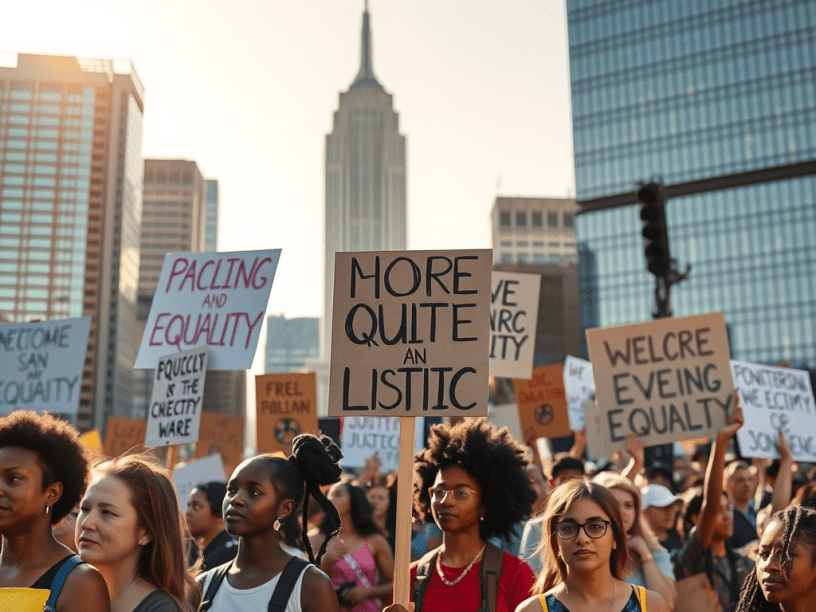
Many Americans feel compelled to challenge the status quo when they believe their rights are not being safeguarded. This sentiment is often expressed through protests, advocacy, and mobilization for policy changes. Movements of civil unrest, in reaction to government actions under the current President, can thus be seen as an embodiment of this right to “alter or abolish” systems that do not serve the populace effectively.
Conclusion
The Preamble to the Declaration of Independence remains a profound guide for understanding the current dynamic of power, rights, and governance in the United States. As the nation grapples with its collective identity, the principles enshrined in this foundational document offer a framework for assessing contemporary challenges, particularly under the leadership of the 47th President.
The enduring truth that “when in the course of human events” it becomes necessary to challenge authority resonates deeply with those who believe that the government has strayed far from its intended purpose. The invocation of natural rights, equality, and the consent of the governed serves not only as a reminder of the hard-fought battles for freedom, but also as an encouragement for citizens to remain vigilant in their pursuit of justice.
As Americans witness the unfolding of social, economic, and political struggles, the moral obligation to call for change becomes increasingly clear. The Preamble articulates a vision of what a just society should be—a society in which rights are respected, equality is upheld, and government serves the needs of its people. It calls upon individuals to engage actively in the democratic process, to hold their leaders accountable, and, when necessary, to take to the streets in pursuit of justice.
In this era of heightened political tension, the words of the Declaration of Independence remind us that our historical struggle for freedom and equity is far from over. As we reflect on these principles, we must recognize that the fight for a government truly of the people, by the people, and for the people is an ongoing endeavor—it requires not only courage and conviction but also engagement and action.
Together, as concerned citizens, it is our responsibility to ensure that the ideals of the Declaration are realized in practice. The call to alter an ineffective or unjust government continues to echo throughout the ages, urging us to be active participants in the shaping of our future. As we unite to uphold these founding principles, we reaffirm our commitment to democracy, justice, and the unalienable rights of all individuals.
 Occupy 2.5