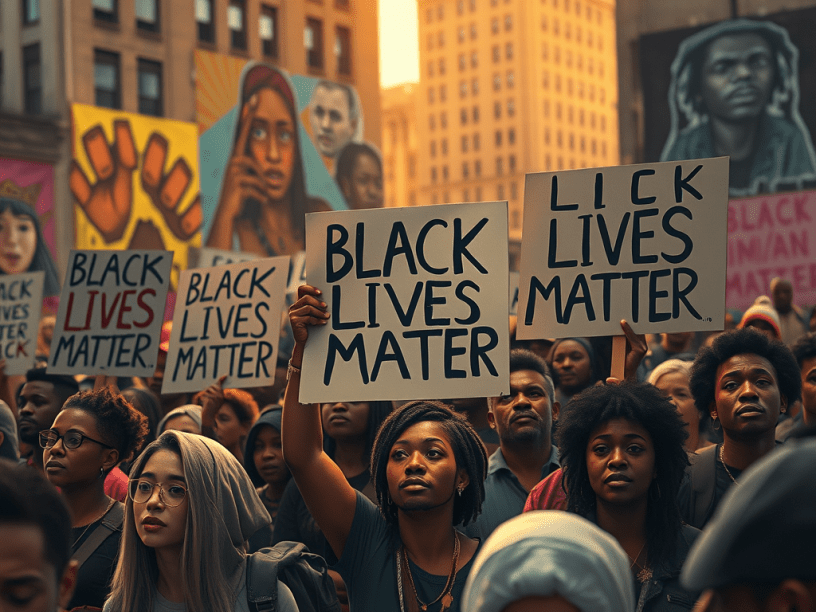
The Black Lives Matter (BLM) movement has emerged as a powerful voice against systemic racism and injustice, igniting widespread protests across the United States and beyond. At its core, the moral justification for BLM taking to the streets is founded on the urgent need to address the pervasive violence against Black lives and demand accountability from institutions that perpetuate racial discrimination. In a nation where racial disparities in policing, healthcare, education, and economic opportunities persist, the movement serves as a clarion call for justice, equality, and an unwavering commitment to human rights.
The catalyst for BLM’s protests stems largely from the tragic and preventable deaths of numerous Black individuals at the hands of law enforcement. Events such as the killings of George Floyd, Breonna Taylor, and Ahmaud Arbery shocked the collective conscience of society, juxtaposing the glorified ideals of American democracy against the brutal realities faced by marginalized communities. In the wake of these tragedies, protests have surged, fueled by anger, grief, and a powerful demand for justice. The moral imperative to confront these inequities through protest is rooted in the belief that every human life holds inherent value, and these lives were unjustly taken amid a systemic failure to protect them. Demonstrators take to the streets not only to grieve but to reclaim the narrative surrounding these injustices, demanding accountability and asserting that Black lives matter.
Moreover, the BLM movement seeks to shine a light on the broader, systemic issues of racism that permeate every aspect of society. The protests exemplify the recognition that racism is not merely an individual act of prejudice but rather an entrenched system that privileges certain groups while oppressing others. BLM aims to disrupt the status quo, challenging societal norms that have long marginalized Black individuals. This disruption is not only vital but moral—demanding that society confront uncomfortable truths about its history and the ongoing legacies of colonialism and oppression.
Additionally, the protests serve as a means of voicing the pain and frustration experienced by Black communities. The act of protesting is a powerful assertion of the need for visibility and empathy, drawing public attention to the struggles faced daily. When individuals gather en masse to demand justice, they create a communal sense of urgency that compels society to take notice and act. The moral justification for marching in the streets lies in the recognition that silence, acquiescence, and complacency in the face of injustice only perpetuate the cycle of oppression. By taking to the streets, BLM advocates for collective action designed to invoke change at a cultural and institutional level.
Furthermore, the BLM movement transcends individual incidents, advocating for a thorough reevaluation of societal values and practices. It calls for systemic change that encompasses education, healthcare, public safety, and economic equity. The protests demand that institutions not only acknowledge past wrongs but actively work to dismantle systems of oppression. This commitment to equity is underpinned by the belief that justice cannot be achieved without accountability, and that profound institutional changes are required to create a society where all individuals are afforded the same rights and protections.
In conclusion, the moral justification for the Black Lives Matter movement taking to the streets is grounded in the imperative to address historical injustices, advocate for human rights, and seek accountability for the systemic violence faced by Black individuals. The movement not only confronts the tangible reality of police brutality but also challenges the societal structures that enable racism to thrive. Protest becomes a means of reclamation, empowerment, and collective awakening, affirming that equality and justice are not just demands but inherent rights owed to every individual. As long as systemic inequities persist, the call to action will remain unyielding, highlighting that standing idle is not an option. BLM stands as a reminder that the fight for justice continues, and that the moral responsibility to challenge oppression lies with every one of us.
 Occupy 2.5