
Let’s see what we have in this little cubbyhole.
Let’s break it down! So, the phrase “he who saves his/her country is free from the law” captures a lot of the ideas folks talk about when referencing Napoleon Bonaparte, but it’s not an exact quote from him. It’s more of a concept that reflects on how history views leadership. The idea here is that sometimes people, especially leaders, think they can justify bending or breaking the rules if they believe they’re doing it for a good cause—like saving their country.

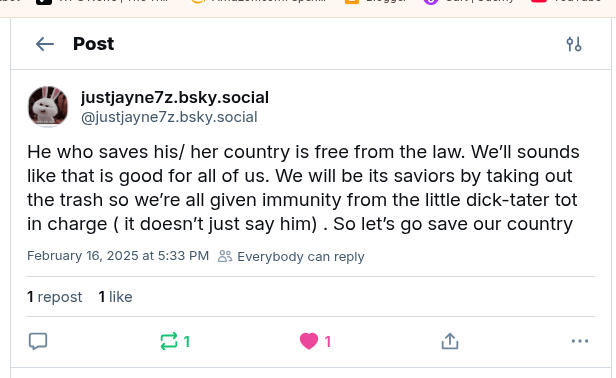
Napoleon himself said plenty of things about power and governance, but this specific phrasing isn’t something you’d find in his quotes directly. It’s the spirit of a sentiment that people have discussed throughout time, particularly around moments of revolution or drastic political change.
Let’s throw this into the existing piece to keep everything clear and prevent any mix-ups:
The quote from justjayne7z really kicks off an interesting conversation, right? It references a quote from Napoleon Bonaparte about saving your country and being free from the law, which can definitely spark some heated discussions. It’s almost like saying that if you’re doing something for the greater good, then who really cares about the rules?
When we look at leaders like Trump and Musk, there are definitely people who feel like their actions can come off as heavy-handed—kind of draconian, if you will. The way justjayne7z puts it, it sounds like there’s a lot of frustration bubbling up. Calling Trump a “little dick-tater tot” is a bold move. It really paints a picture of how some folks perceive authority figures who they think are acting like they’re above everyone else. It’s not just Trump receiving the heat; it’s the whole vibe of leadership that feels out of touch.
So, the idea of “taking out the trash” has a strong resonance. It’s like rallying the troops to clean house, to sweep away what’s perceived as corruption or ineffective governance. It’s a call to action for those who feel like the current state of affairs just isn’t cutting it. When people go, “Let’s save our country!” they’re tapping into that urge to be part of something bigger, to take a stand against what they believe is wrong.
Activism is totally important, and it’s awesome to see people getting involved and voicing their opinions, but it’s worth keeping in mind that change doesn’t have to come from anger alone. Sure, it can motivate you, but working within the system to create change can be just as powerful—and a lot less risky.
In the end, it’s about reflecting on what it really means to fight for your country. It’s easy to get swept up in the emotion of it all, especially when the stakes feel high, but thoughtful conversation and collaboration can often be the best way to make a real impact. Engaging in meaningful ways and promoting understanding can help ensure that whatever changes happen come from a place of unity rather than division. So, let’s channel that energy into something constructive—sounds like the best way to show we care about our future, right?
In Money, Misery, and the Masses: The First 50 Years, author Cliff Potts presents a captivating and thought-provoking exploration of our dynamic human landscape from 1957 to 2007—right as the storm clouds of the Great Recession began to gather. This engaging narrative delves into the intricate interplay between wealth, societal struggles, and the complexities of gender roles, offering readers a fresh and witty perspective on what shapes our world.
Potts expertly addresses the pressing questions of business and economics during the pivotal years leading to the 2000s. He outlines how businesses can evolve from perceived adversaries to valued community citizens, advocating for a balanced approach that steers clear of oligarchy. This slimmed-down version of Wealth, Women, and War delivers practical ideas that empower readers to build wealth while earning respect in today’s landscape.
With unexpected twists and incisive insights, Money, Misery, and the Masses is not just a historical account; it’s a roadmap for the future. As part of Cliff Potts’ impressive collection—which includes titles like Well Past Midnight, Radicals, Religion, and Revelation, and Conspirators, Confederates, and Cronies—this book stands out as a must-read for anyone looking to understand the forces that have shaped our society and discover paths to mutual prosperity. Don’t miss your chance to join Cliff Potts on this enlightening expedition through history and human nature. Grab your copy today and uncover how to turn business into a force for good!
 Occupy 2.5