🧾😞 #Triangulation
In the summer of 1996, President Bill Clinton signed into law one of the most consequential — and controversial — pieces of social policy in modern U.S. history: the Personal Responsibility and Work Opportunity Reconciliation Act (PRWORA). Backed by a Republican-controlled Congress and Clinton’s now-infamous strategy of triangulation, the law was celebrated at the time as a bipartisan solution to “end welfare as we know it.” But for millions of Americans, it ended something far more fundamental: their stability.
In Clinton’s own words at the time, “This is a good day for America. After years of false starts, we are ending welfare as we know it.”¹ Yet nearly three decades later, the legacy of PRWORA has proven not just flawed but deeply damaging. By severing the federal guarantee of assistance to the poor, PRWORA tossed millions off the rolls and plunged them deeper into the very poverty it claimed to address.
From Safety Net to Trapdoor
The 1996 law replaced Aid to Families with Dependent Children (AFDC) — a New Deal-era entitlement — with Temporary Assistance for Needy Families (TANF), a block grant system that capped federal spending and handed broad discretion to states. It imposed strict work requirements, lifetime limits on aid, and sanctions for noncompliance.
While caseloads fell dramatically — by more than 60% over a decade² — research shows this drop was not due to reduced need, but increased exclusion. The Center on Budget and Policy Priorities found that by 2019, for every 100 families in poverty, only 23 received TANF assistance, down from 68 in 1996.³ The Urban Institute reported that “declines in assistance did not correspond with declines in poverty or improvements in child well-being.”⁴
And in many states, TANF funds were used not for direct aid but to plug budget holes or fund dubious programs. As journalist Lizzie Presser reported in ProPublica, states like Mississippi and Texas diverted TANF dollars into faith-based counseling or anti-abortion centers, not food or housing assistance.⁵
Wisconsin’s Experiment: The Rural Fallout
One of the earliest adopters and fiercest implementers of welfare reform was Wisconsin under then-Governor Tommy Thompson, affectionately nicknamed “Two Bottle Tommy” by some locals for reasons better left to folklore. Thompson’s version of reform was a blueprint for the national model Clinton would later adopt.
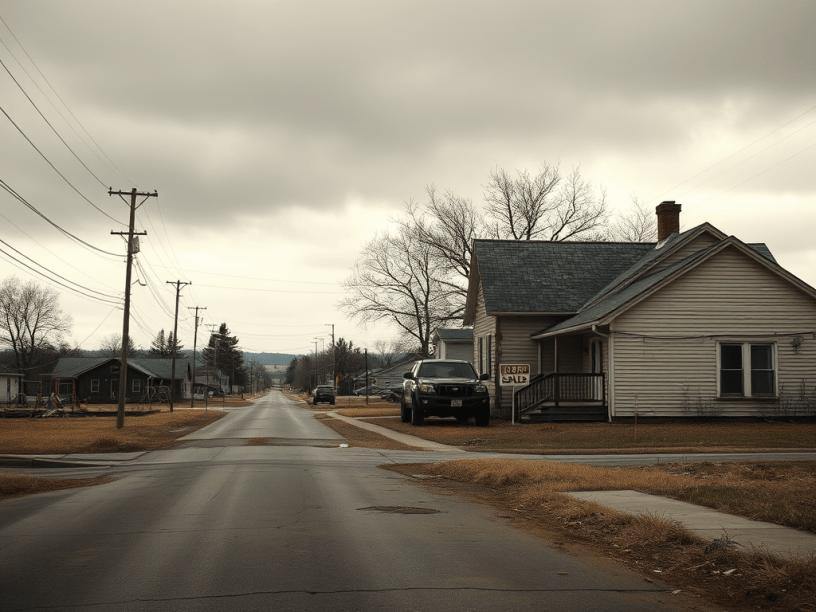
In rural Wisconsin — where industrial jobs were scarce and agrarian life was precarious — the effect was devastating. A personal story illustrates how this played out.
In the late 1990s, I worked in a rural county where the only employer with more than 50 workers was a fruit processing plant affiliated with Ocean Spray. Jobs there were so coveted that nepotism became an informal hiring policy. If you weren’t someone’s nephew, cousin, or sibling, your only chance was shoveling manure on a family farm or maybe, just maybe, working maintenance — but only if you were both related and a certified welder.
Welfare reform’s “workfare” policy created a perverse incentive: the state paid employers the difference between the old welfare check and the minimum wage for any welfare recipient hired. So if a firm hired someone on welfare, they paid only $2 or $3 an hour out-of-pocket — the state covered the rest.
Guess who got pushed out? The guy who had been working at minimum wage all along. These weren’t jobs being created. These were jobs being replaced — low-wage workers swapped for cheaper, subsidized ones. That’s how “workfare” operated in places like mine: not as a ladder up, but a trapdoor down.
The policy didn’t just hurt welfare recipients struggling to find work. It punished the working poor — the very people welfare reform claimed to reward.
A Race to the Bottom
Nationally, Clinton’s welfare reform ushered in a race to the bottom. States with the strictest policies became models for others. Work requirements became more punitive, time limits shorter, and eligibility rules narrower. Academic studies confirmed what rural workers already knew: most people leaving welfare weren’t finding good jobs — they were falling into deeper hardship.⁶
A 2022 report by the National Bureau of Economic Research found that PRWORA increased “deep poverty” — defined as living at less than half the poverty line — particularly among children and single mothers.⁷ The most vulnerable Americans were left with fewer protections than at any time since the Great Depression.
Triangulation’s Human Cost
Clinton’s strategy of triangulation — borrowing Republican rhetoric to defuse Republican power — helped him win re-election in 1996, but it came at a tremendous human cost. In trading Democratic principles for political expediency, he didn’t just “reform” welfare. He broke it.
Critics at the time warned of the long-term consequences. Then-Senator Daniel Patrick Moynihan declared the bill would leave “children sleeping on grates” and called it “the most brutal act of social policy since Reconstruction.”⁸ He was not wrong.
Today, as we revisit Clinton’s presidency through the lens of policy rather than personality, we must reckon honestly with this history. Welfare reform didn’t lift Americans out of poverty — it criminalized and commodified their need. It handed state bureaucrats the power to starve families and call it success.
In 2025, with poverty rising again amid inflation, housing insecurity, and automation-driven job loss, we must ask: What did we really reform? And at what cost?
Footnotes:
¹ Clinton, W. J. (1996, August 22). Remarks on signing the Personal Responsibility and Work Opportunity Reconciliation Act of 1996. The American Presidency Project. https://www.presidency.ucsb.edu/
² Haskins, R. (2006). Work over welfare: The inside story of the 1996 welfare reform law. Brookings Institution Press.
³ Floyd, I., Pavetti, L., & Schott, L. (2020, January 22). TANF reaching few poor families. Center on Budget and Policy Priorities. https://www.cbpp.org/
⁴ Urban Institute. (2016). Welfare Reform at 20: What We Know and What We Don’t. https://www.urban.org/research/publication/welfare-reform-20
⁵ Presser, L. (2019, October 14). How welfare reform left poor people with virtually nothing. ProPublica. https://www.propublica.org/
⁶ Parolin, Z., & Brady, D. (2019). The poverty-reducing effects of the Earned Income Tax Credit and the Child Tax Credit: A simulation approach. Social Problems, 66(3), 419–441.
⁷ Bitler, M. P., & Hoynes, H. W. (2022). The more things change, the more they stay the same? The safety net and poverty in the last decade. National Bureau of Economic Research. https://www.nber.org/
⁸ Moynihan, D. P. (1996). Floor Statement on the Welfare Bill. Congressional Record, August 1, 1996.
 Occupy 2.5