Clinton Tried to Expand “Free Trade” to All of the Americas—Activists Said No Way 🌎🚫
#Triangulation | August Blog Series
In the 1990s, President Bill Clinton wanted to make a giant trade deal that would cover the whole Western Hemisphere—from Canada all the way down to Argentina. He called it the Free Trade Area of the Americas (FTAA). But activists, unions, and everyday people fought back hard. And they won.
Here’s how Clinton tried to push it—and how people shut it down.
What Was the FTAA?
The FTAA was a plan to make a super-sized version of NAFTA (the North American Free Trade Agreement). NAFTA, which started in 1994, allowed easier trade between the U.S., Canada, and Mexico. Clinton and other leaders wanted to take this idea and apply it to 34 countries in North, Central, and South America.
Supporters said the FTAA would help countries trade more, grow their economies, and work together better. But critics warned it would:
- Let big corporations exploit poor countries.
- Hurt workers by outsourcing jobs.
- Weaken environmental and labor protections.
Basically, many people believed the FTAA would benefit the rich and powerful—and leave the rest behind.
Who Tried to Stop It?
The FTAA may have been dreamed up by politicians and business leaders, but it was everyday people who stopped it.
Starting in the late 1990s, labor unions, farmers, students, Indigenous groups, environmental activists, and anti-globalization protestors across the Americas started organizing. They called for fair trade, not free trade.
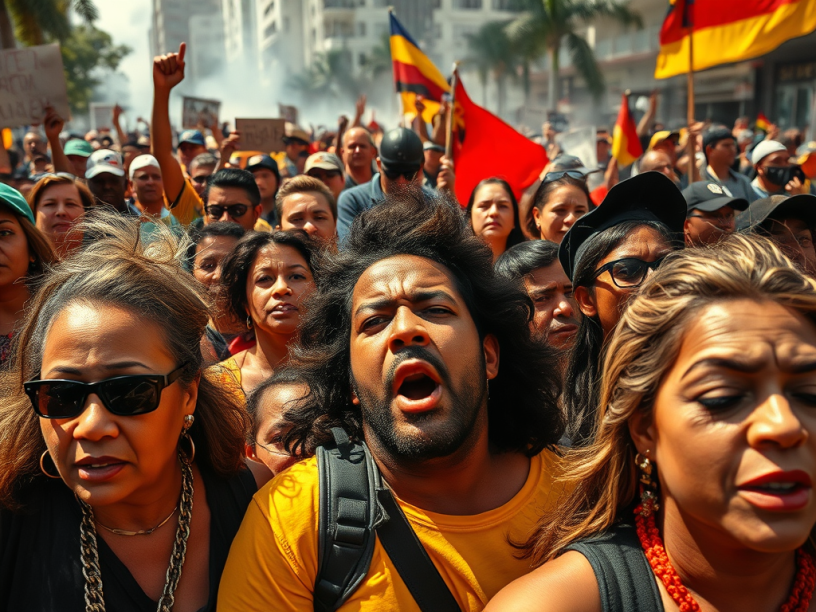
One of the biggest turning points came in November 2003 in Miami, Florida, where leaders met to try to move the FTAA forward. Over 20,000 protesters showed up to say no. They held signs, marched, chanted, and told the world why the FTAA would hurt workers and communities1.
Police responded with tear gas, rubber bullets, and mass arrests. This violent response shocked many, but it also got the movement even more attention.
Why Did People Oppose the FTAA?
Many saw the FTAA as just another way for big businesses to make more money—while workers got left behind.
Lori Wallach, director of Public Citizen’s Global Trade Watch, said the FTAA was a “corporate power grab that would roll back public interest laws across the hemisphere”2.
Activists feared that if the FTAA passed:
- Companies could sue governments for protecting workers or the environment.
- Local jobs would disappear as companies chased cheap labor.
- Indigenous land and rights would be ignored or taken.
It was like NAFTA all over again—but even bigger.
What Happened to the FTAA?
After the protests in Miami in 2003, the FTAA lost steam. Countries like Brazil and Venezuela, led by Lula da Silva and Hugo Chávez, spoke out strongly against it. They didn’t want to hand over power to U.S. corporations.
By 2005, the FTAA was basically dead.
President Chávez declared the FTAA had “collapsed,” and Latin American countries started building their own trade agreements without U.S. involvement3.
Even U.S. media took notice. The Los Angeles Times reported, “Free-trade talks for the Americas ended with no agreement and no plan for moving forward”4.
What Did We Learn?
The fight against the FTAA showed that people can stand up to powerful interests—and win. It also showed that “free trade” isn’t always fair trade.
Activists across the Americas came together to protect their communities, jobs, and environment. They didn’t have the money or the power of corporations—but they had each other.
As Naomi Klein, author of No Logo, said about the Miami protests:
“People understood the FTAA would bring the same problems as NAFTA, only multiplied. That’s why they resisted.”5
Final Thoughts
President Clinton’s push for hemispheric free trade was part of his larger plan to look like a pro-business Democrat. That’s what we call #Triangulation—trying to be both progressive and pro-corporate at the same time.
But when it came to the FTAA, people across the Americas weren’t buying it. They wanted justice, not just trade. And they got it.
Footnotes
- Dembart, L. (2003, November 21). Thousands Protest Free Trade in Miami. NPR. https://www.npr.org/templates/story/story.php?storyId=1519283 ↩
- Public Citizen. (2003). FTAA: Why We Say No. https://www.citizen.org/article/ftaa-why-we-say-no/ ↩
- Forero, J. (2005, November 6). Trade Plan for Americas Fails to Win Support at Summit. The New York Times. https://www.nytimes.com/2005/11/06/world/americas/trade-plan-for-americas-fails-to-win-support-at-summit.html ↩
- Krikorian, G. (2005, November 6). Talks Collapse on Free-Trade Area of Americas. Los Angeles Times. https://www.latimes.com/archives/la-xpm-2005-nov-06-fg-summit6-story.html ↩
- Klein, N. (2004). No Logo: Taking Aim at the Brand Bullies. Picador. ↩
 Occupy 2.5