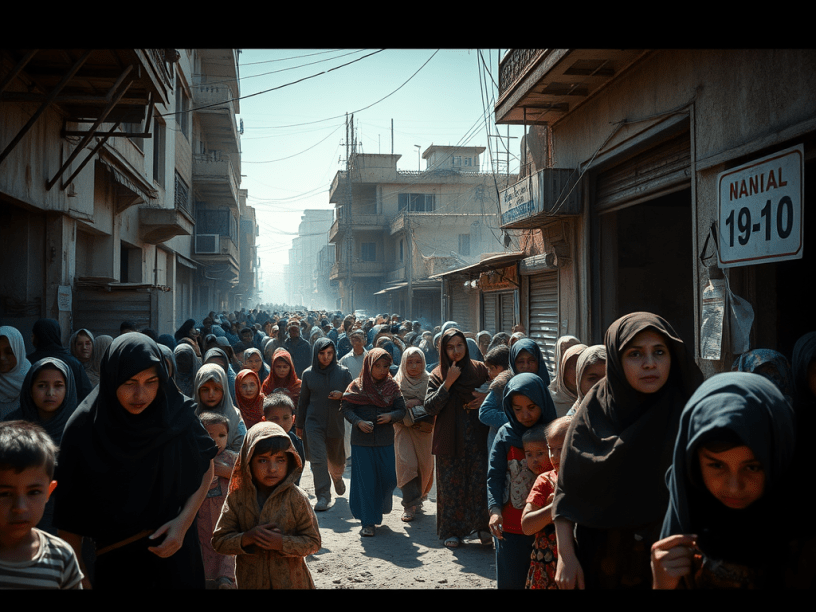
Clinton: Backed Iraq Sanctions That Starved Civilians
Introduction
In the wake of the Gulf War, the United States imposed stringent economic sanctions on Iraq that lasted through the 1990s. These sanctions, supported by President Bill Clinton’s administration, have been widely criticized for their devastating impact on the Iraqi civilian population. As evidence emerged regarding the severe humanitarian crisis these sanctions created, questions arose about the accountability of U.S. foreign policy and its long-term consequences.
What Happened?
In 1990, after Iraq, led by President Saddam Hussein, invaded Kuwait, the United Nations (UN) quickly imposed economic sanctions aimed at pressuring the Iraqi government to withdraw its troops. The Clinton administration, which took office in 1993, continued and even expanded these sanctions. By the late 1990s, reports indicated that the UN sanctions were crippling the Iraqi economy and exacerbating poverty among civilians.
Humanitarian groups and NGOs reported alarming rates of malnutrition, disease, and mortality among Iraqi children and vulnerable populations. According to a report by the United Nations Children’s Fund (UNICEF), over 500,000 Iraqi children died as a consequence of the sanctions by 1999 (UNICEF, 1999). This period sparked intense debate over the ethical implications of using sanctions as a foreign policy tool.
Who Was Affected?
The sanctions predominantly affected ordinary Iraqis, particularly women and children. Basic necessities such as food, medicine, and clean water became scarce, leading to widespread suffering. Many families faced dire choices between purchasing food and accessing essential healthcare. Reports highlighted that malnutrition rates surged among children, resulting in severe health consequences that persist to this day.
Humanitarian organizations pleaded for the lifting of sanctions, arguing that they disproportionately harmed innocent civilians rather than forcing the Iraqi leadership to change its policies. The situation evoked international outrage, yet the sanctions remained largely intact throughout Clinton’s presidency.
Where Did It Happen?
The sanctions were imposed on Iraq, a country in the heart of the Middle East, following its invasion of Kuwait. These measures affected the entire Iraqi population, particularly in urban areas where access to food and healthcare was already limited due to the complexity of war-related destruction.
The impact was profound, leading to economic disintegration, deterioration of public health systems, and an overall decline in living conditions. Hospitals lacked essential medical supplies, schools suffered from underfunding, and the basic infrastructure of the nation crumbled under the strain of prolonged sanctions.
When Did It Occur?
The US-backed sanctions began in August 1990, shortly after Iraq invaded Kuwait. They continued throughout the 1990s, reaching their apex around 1996-1999. Clinton’s administration faced mounting pressure to evaluate the effectiveness of the sanctions, especially amidst growing evidence of their dire humanitarian effects.
Despite calls from both domestic and international actors to reassess the sanctions, Clinton maintained that they were an essential component of the U.S. strategy to contain Iraq and prevent it from rebuilding its military capabilities.
Why Did It Happen?
The motivations behind the sanctions stemmed from a desire to neutralize Iraq as a regional threat following its invasion of Kuwait. The U.S. Government, along with its allies, sought to ensure that Saddam Hussein would not accumulate power or pose further threats to neighboring nations. While the intention was to pacify a volatile situation, the implementation of these sanctions had unforeseen consequences that disproportionately harmed innocent civilians.
Critics argue that the sanctions acted as collective punishment, inflicting severe hardships on the general population instead of targeting the ruling elite responsible for the aggression. In hindsight, the rationale behind the sanctions raises questions about the ethical considerations involved in international conflict resolution.
Accountability and Responsibility
The consequences of the sanctions have led to intense discussions about accountability in U.S. foreign policy. Clinton’s administration, while ostensibly acting in the interest of global stability, faces criticism for prioritizing strategic goals over humanitarian principles. By supporting sanctions that led to widespread suffering, the administration bears responsibility for the humanitarian disaster that unfolded.
A particular point of contention revolves around the infamous quote from then-U.S. Ambassador to the UN Madeleine Albright, who stated that the deaths of 500,000 Iraqi children due to sanctions were “worth it” to achieve U.S. goals (Albright, 1996). This statement sparked outrage worldwide and highlighted the moral dilemmas faced by policymakers when enacting foreign policy.
A Need for Reevaluation
The lessons learned from the Iraqi sanctions echo in modern discussions around conflicts and humanitarian crises. Political leaders must carefully assess the implications of their decisions, considering the potential fallout for civilian populations. Diplomatic tools must prioritize humanitarian needs, emphasizing dialogue over punitive measures that harm innocent lives.
Conclusion
The sanctions imposed on Iraq during the Clinton administration serve as a cautionary tale about the consequences of foreign policy decisions. While intended to contain a perceived threat, these measures resulted in catastrophic humanitarian outcomes. Moving forward, it is crucial for political leaders to strive for policies that prioritize human rights and the welfare of civilian populations, ensuring that history does not repeat
Sidebar: The Goals Behind U.S. Sanctions on Iraq and the Path to 9/11
The quote from then-U.S. Ambassador to the UN, Madeleine Albright, regarding the deaths of 500,000 Iraqi children due to sanctions being “worth it” has reverberated throughout discussions of U.S. foreign policy during the Clinton administration. To understand her statement, it’s essential to examine the broader objectives that Clinton sought in Iraq, as well as the implications that would echo into the future of U.S. national security.
Goals of the Clinton Administration
Bill Clinton’s administration prioritized several key objectives concerning Iraq following the Gulf War:
- Containment of Saddam Hussein: The foremost goal was to prevent Iraqi President Saddam Hussein from reestablishing military strength after the Gulf War. The belief was that sanctions would pressure his regime into compliance with UN resolutions, particularly concerning disarmament of weapons of mass destruction (WMD).
- Stabilization of the Middle East: The U.S. was keen on maintaining stability in the Middle East, a region crucial to global oil supplies and international politics. Ensuring that Iraq could not threaten neighboring countries—such as Saudi Arabia and Kuwait—was a fundamental tenet of U.S. foreign policy.
- Democracy Promotion: There was a belief that weakening Hussein’s regime could contribute to a transition to democratic governance in Iraq, fostering a political environment where human rights would be prioritized.
- Upholding International Norms: Supporting sanctions was also seen as a means of enforcing international norms against aggression and human rights abuses, sending a message that the U.S. would not tolerate violations of international law.
The Disconnect Between Iraq and 9/11
Despite the objectives outlined, no credible connection was found between Iraq and the terrorist attacks on September 11, 2001. The motivations behind the attacks stemmed primarily from broader grievances against U.S. foreign policy in the Middle East, such as support for Israel and military presence in Saudi Arabia. These issues created a complex landscape of animosity unrelated to the sanctions imposed on Iraq.
While Clinton’s administration aimed to contain Saddam Hussein for strategic reasons, it did not foresee the long-term implications of such policies. The severe humanitarian crisis resulting from the sanctions raised profound ethical questions about their justification, especially when framed in the context of human rights.
Albright’s Reflection
Albright’s controversial statement about the deaths of Iraqi children being “worth it” reflects a stark and painful reality—the tragic cost of foreign policy decisions. While she and others within the administration may have viewed the sanctions as a necessary means to an end, the catastrophic humanitarian impact ultimately contradicted the stated values of protecting human rights.
This disconnect highlights the broader moral dilemmas inherent in international relations. The rhetoric emphasizing human rights often fell short when juxtaposed against the real and devastating effects on civilian lives in Iraq. The legacy of the sanctions continues to foster debate about the ethics of U.S. foreign policy and the prioritization of strategic interests over humanitarian considerations.
In conclusion, while Clinton’s administration sought to curtail Saddam Hussein’s regime for various reasons, the fallout of the sanctions illustrated the complex interplay between foreign policy decisions and their long-term repercussions. The lesson remains that the human cost of such policies must not be overlooked in the pursuit of national security objectives.
 Occupy 2.5