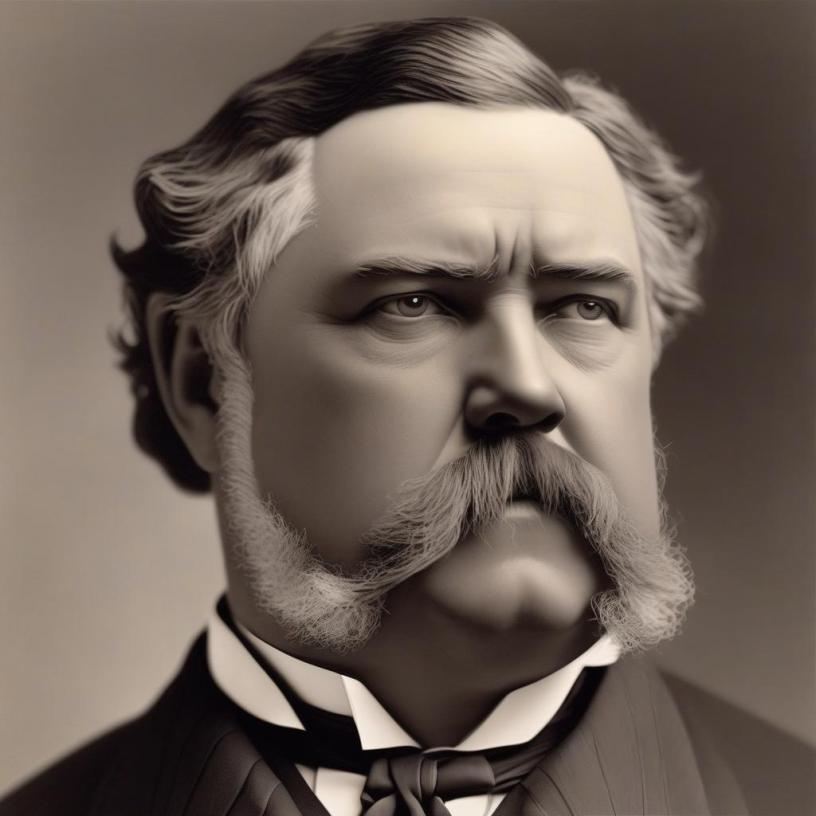
Chester A. Arthur: A Surprising President and a Gentleman
Chester A. Arthur was the 21st president of the United States. He served from 1881 to 1885. At first, many people didn’t expect much from him. He had been a part of political machines, which were groups that helped certain politicians stay in power. People thought he would just do whatever his friends wanted. But once he became president, Arthur surprised everyone. He worked hard, made smart choices, and showed that he truly cared about the country.
Early Life and Career
Chester Alan Arthur was born on October 5, 1829, in Fairfield, Vermont. His father was a preacher and moved the family around a lot. Chester went to Union College in New York and became a lawyer. He was very smart and charming, with a great sense of style. People often admired how well he dressed—he even owned over 80 pairs of pants!
Before becoming president, Arthur worked as a lawyer and later served as the Collector of the Port of New York. This was a powerful job, where he helped manage taxes on goods coming into the country. It also gave him lots of political connections.
Becoming President
Arthur became vice president in 1881 under President James A. Garfield. But just a few months into Garfield’s term, a man shot the president. Garfield died from his wounds, and on September 19, 1881, Chester A. Arthur became president.
At first, people were nervous. They thought Arthur would be controlled by the powerful politicians who helped him get his job. But Arthur wanted to prove them wrong.
What He Did as President
One of the most important things Arthur did was support the Pendleton Civil Service Reform Act. This law made sure that people got government jobs because of their skills, not because they knew someone important. It helped stop corruption and made the government more fair and honest. This was a big change, and Arthur showed real courage by supporting it—even though it upset some of his old friends.
Arthur also improved the U.S. Navy. He helped build stronger, more modern ships so the country would be ready to protect itself if needed. This showed that he cared about America’s future, not just what was easy.
He also tried to make the country’s immigration system more organized, though some of the laws passed during his time were unfair, like the Chinese Exclusion Act. Still, Arthur used his veto power to stop an even harsher version of that law, showing he had a sense of justice.
Personal Life
Chester A. Arthur was a widower when he became president. His wife, Ellen, had died of pneumonia in 1880. He missed her deeply and had a stained glass window made in her honor at a church in Washington, D.C. Arthur loved music, fancy dinners, and staying up late. He had a kind heart and a soft spot for his friends. He also cared about how he looked—he was known for having impressive sideburns and being one of the best-dressed presidents in history.
Even though he was private and quiet, Arthur was friendly and polite. If you had dinner with him, you’d probably laugh a lot and enjoy the conversation. He wasn’t loud or bossy. Instead, he listened well and made people feel comfortable.
His Final Years
While he was president, Arthur found out he had a disease called Bright’s disease, which affects the kidneys. He kept it a secret from the public and bravely continued his work. When his term ended in 1885, he didn’t run again. He returned to New York City, where he lived quietly.
Chester A. Arthur died on November 18, 1886, at the age of 57. He passed away peacefully in his home.
Why He Deserves Respect
Chester A. Arthur may not be as famous as other presidents, but he was a man of honor. He surprised everyone by being strong, fair, and independent. He stood up for what was right, even when it was hard. He helped clean up the government and made sure future workers were chosen for their talent, not their connections.
If you had met Chester A. Arthur, you probably would have liked him. He was a gentleman, a listener, and someone who believed in doing better—even when no one expected him to.
That’s why history looks back at him with new respect. He showed that anyone can rise to the moment, even when it seems unlikely.
 Occupy 2.5