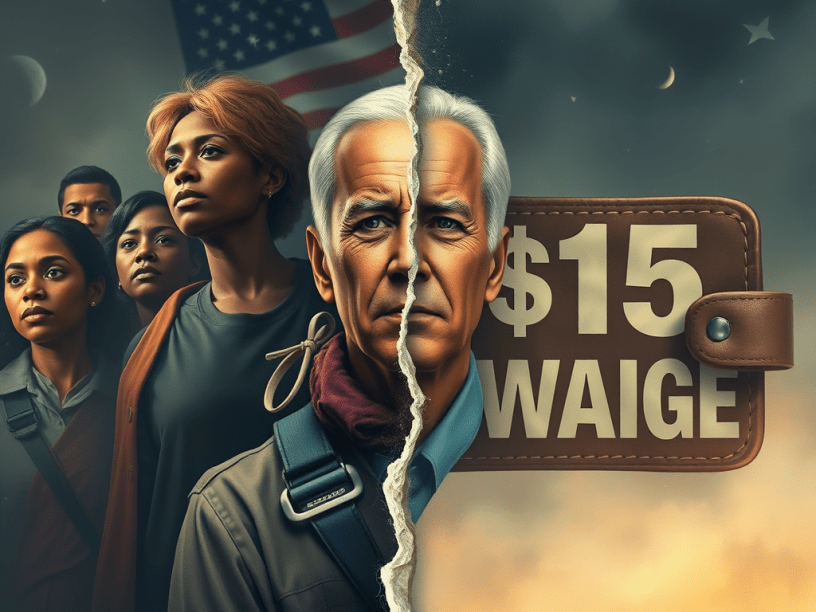
Biden: Vowed to Raise the Minimum Wage to $15. Settled for $0. Dreams of a Living Wage? Still a Dream.
In his 2020 presidential campaign, Joe Biden pledged to raise the federal minimum wage to $15 per hour, aiming to uplift millions of low-wage workers. While he succeeded in increasing wages for federal employees and contractors, the broader promise remains unfulfilled. This analysis examines the trajectory of Biden’s minimum wage initiative, the challenges encountered, and its implications for American workers.
The $15 Minimum Wage Promise
President Biden’s commitment to a $15 federal minimum wage was a cornerstone of his campaign, reflecting a broader Democratic agenda to address income inequality. The federal minimum wage had stagnated at $7.25 since 2009, despite rising living costs. Biden’s proposal aimed to double this rate, aligning with progressive calls for a living wage.
Partial Fulfillment Through Executive Action
In April 2021, Biden signed Executive Order 14026, mandating a $15 minimum wage for federal contractors, effective January 30, 2022. This order also stipulated annual adjustments based on inflation, raising the wage to $17.75 by January 1, 2025. Approximately 390,000 federal contract workers, many of whom are women and people of color, benefited from this increase.
While this action improved wages for a segment of workers, it fell short of the nationwide increase Biden had promised. The executive order’s scope was limited to federal contracts, leaving the broader workforce unaffected.
Legislative Hurdles and Political Realities
Biden’s attempt to include the $15 minimum wage in the American Rescue Plan faced procedural challenges. The Senate parliamentarian ruled that the wage increase could not be included under budget reconciliation rules, which allow certain budget-related bills to pass with a simple majority. Subsequent efforts to pass standalone legislation stalled amid political opposition.
Despite public support for raising the minimum wage, including among some Republican voters, the Biden administration did not prioritize further legislative action on this front. This inaction contributed to perceptions of a broken promise.
Legal Challenges and Judicial Responses
The executive order faced legal challenges, with some courts questioning the president’s authority to mandate wage increases for federal contractors. In November 2024, the 9th Circuit Court of Appeals ruled that Biden exceeded his authority, while the 5th Circuit upheld the order in February 2025. These conflicting decisions highlight the contentious nature of executive actions in labor policy.
Implications for Workers and Policy
The limited scope of Biden’s wage increase has significant implications. While federal contractors saw tangible benefits, millions of workers nationwide continue to earn the stagnant federal minimum wage. This disparity underscores the challenges of enacting comprehensive wage reforms through executive action alone.
Moreover, the administration’s failure to fulfill its broader promise may erode trust among constituents who expected more substantial economic reforms. The situation illustrates the complexities of policymaking in a divided government and the limitations of executive authority.
Conclusion
President Biden’s efforts to raise the minimum wage achieved partial success through executive action, benefiting federal contractors. However, the broader promise of a $15 federal minimum wage remains unfulfilled, hindered by legislative obstacles and political opposition. This outcome reflects the challenges of implementing ambitious economic policies in a polarized political environment and raises questions about the efficacy of executive orders in achieving widespread labor reforms.
References
- AP News. (2021, April 27). Biden signs $15 minimum wage for federal contract workers. https://apnews.com/article/minimum-wage-coronavirus-government-and-politics-politics-health-d89b279c821af20607a02fbcfd9d8ff4
- PolitiFact. (2024, December 5). Biden Promise Tracker: Increase the federal minimum wage to $15/hour. https://www.politifact.com/truth-o-meter/promises/biden-promise-tracker/promise/1575/increase-federal-minimum-wage-15hour/
- Reuters. (2025, February 4). US court upholds Biden minimum wage order for federal contractors. https://www.reuters.com/legal/government/us-court-upholds-biden-minimum-wage-order-federal-contractors-2025-02-04/
- Reuters. (2024, November 5). Trump-appointed US judges say Biden can’t dictate federal contractor minimum wage. https://www.reuters.com/legal/government/trump-appointed-us-judges-say-biden-cant-dictate-federal-contractor-minimum-wage-2024-11-05/
- The Guardian. (2021, February 26). House approves $1.9tn Covid aid bill despite minimum wage setback. https://www.theguardian.com/us-news/2021/feb/26/joe-biden-coronavirus-stimulus-bill-aid-package
- U.S. Department of Labor. (n.d.). Fact Sheet #83B – Raising the Minimum Wage for Contractors Under Executive Order 14026. https://www.dol.gov/agencies/whd/fact-sheets/83b-Raising-The-Minimum-Wage-For-Contractors
- White House. (2021, April 27). Executive Order on Increasing the Minimum Wage for Federal Contractors. https://www.whitehouse.gov/briefing-room/presidential-actions/2021/04/27/executive-order-on-increasing-the-minimum-wage-for-federal-contractors/
- White House. (2022, January 28). Statement by President Joe Biden on $15 Minimum Wage for Federal Workers and Contractors Going into Effect. https://www.whitehouse.gov/briefing-room/statements
 Occupy 2.5