November 4, 2025
10:00 PM CST
They’d been too late that year.
Elias Boone and Hatch Carver had ridden up into the Colorado foothills in early September, packs light and hopes high. The beaver runs had dried up west of Denver, and St. Louis traders didn’t wait for hard-luck stories. They needed pelts. Fat ones. Heavy ones. The kind that brought coin and kept a man in powder, coffee, and whiskey till spring.
But this season had been wrong. No sign. No movement. Traps frozen clean for days at a time. The creek whispered strange things after midnight, and even the crows didn’t seem interested in the carcasses Hatch left strung up as bait. Something was off. Both men had felt it but said nothing.
By the first of November, the snow started drifting early and mean.
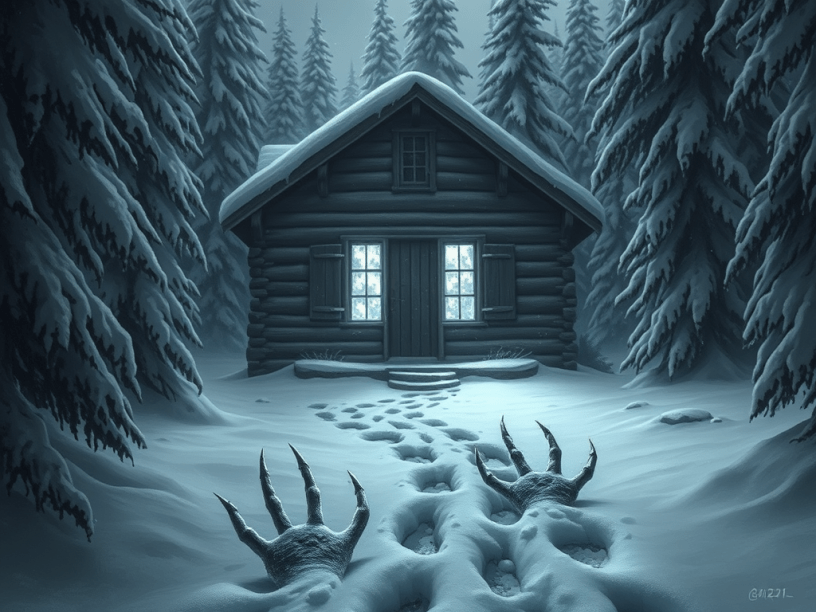
They holed up in an abandoned trapper’s cabin tucked in a ravine no wider than a wagon. The walls were thick with moss and time, but the cold was seeping through, sharper than Elias remembered it ever being. Frost curled across the inside of the windows like something trying to get in.
Or out.
They ran low on food three days in. Hatch said they’d make for the lower valley if the weather broke, but the sky hung heavy with gunmetal clouds. So they rationed, they drank, and they tried not to look too long at the woods. That was when the knocking started.
Not at the door. Not like that.
It was soft at first—more like scratching along the cabin’s logs, like claws gently testing old timber. Hatch went out with the rifle, swearing it was a pine marten or maybe a bobcat. He came back an hour later, pale and shivering, with no words. Just stared at the fire, muttering something under his breath in a tongue Elias didn’t know.
By morning, Hatch was gone. No boots. No coat. Just his rifle and a trail of bare footprints heading into the trees.
Elias followed, of course. He had to. The snow was up to his calves and still falling, and it didn’t take long before the prints changed—subtly, at first. The shape elongated. The toes spread. And then they weren’t feet at all. They were claws. Long, deep furrows in the snow like something dragging itself hungrily across the forest floor.
He should have turned back.
The trail led to a small clearing surrounded by fir trees bent low under their burden of snow. In the center stood Hatch, or what was left of him. His face was hollowed out, lips curled back from cracked teeth, eyes wide and black as pitch. And crouched behind him, half-shadow, half-hide, was a figure made of hunger.
The thing was tall—too tall. Gaunt. Ice seemed to steam from its skin, not melt it. It turned its face toward Elias, and he saw nothing human in its gaze. Only cold. Endless, bone-deep cold.
The wind rose. The snow howled.
Elias ran.
He made it back to the cabin just as night fell. Bolted the door. Stoked the fire. Told himself it was the altitude, the hunger, the fear. But then the frost came again—not on the windows this time, but on the walls. On the stove. On the inside of his coat.
The Wendigo didn’t need to break in.
It was already there.
 Occupy 2.5