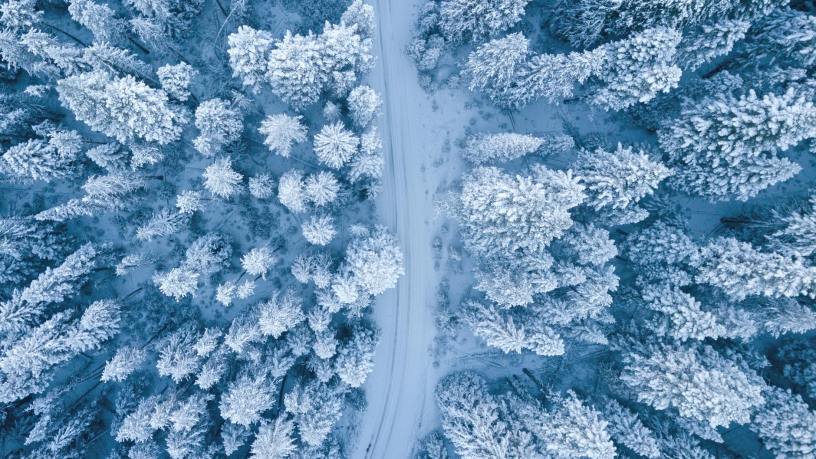
In the bone-chilling January of 2026, Chicago is gripped by an unnatural cold, the kind that seeps into your marrow and makes your breath a ghostly plume. I’m Carl Kolchak, freelance reporter, chasing whispers of the uncanny for the Independent News Service. This time, the story’s a real freezer—people are vanishing in the dead of night, their bodies found frozen solid in alleys, parks, and abandoned lots, faces locked in expressions of terror. The cops call it a freak weather phenomenon, hypothermia run amok. But I’ve seen enough weird to know this ain’t Mother Nature’s doing.
It starts with a tip from my pal Tony Vincenzo, my editor who’s perpetually one ulcer away from firing me. A janitor at the Chicago Loop Synagogue swears he saw a figure—pale as moonlight, eyes like ice chips—drifting through the snow before a local rabbi turned up dead, frozen in his own study. No signs of a struggle, just a faint shimmer of frost on the windows, shaped like claw marks. I hit the streets, my fedora pulled low against the wind, chasing leads through dive bars and occult bookshops.
First stop: Dr. Miriam Weiss, a folklore professor at Northwestern, who tells me about the “Wendigo,” a Native American spirit tied to winter and cannibalistic hunger. “It’s not just a myth, Kolchak,” she warns, her voice low. “Extreme cold can wake things that should stay buried.” She mentions old Algonquian tales of a wraith that feeds on despair, freezing its victims’ souls before their bodies. I’m skeptical, but then she shows me a photo from a 1920s expedition in Manitoba—same claw-like frost patterns on a tent where an entire team vanished.
Next, I tail a lead to Pilsen, where a street vendor named Rosa claims she saw a “hombre de hielo” near an abandoned warehouse. I sneak into the place at midnight, my flashlight cutting through the dark. The air’s so cold my teeth ache. That’s when I see it—a skeletal figure, translucent, gliding across the floor. Its eyes lock on mine, and I feel my blood turn to slush. I bolt, barely making it to my Mustang, my fingers numb as I scribble notes.
The cops, led by Captain Riggs, laugh off my story, blaming “mass hysteria” and subzero temps. But I dig deeper, finding a pattern: all the victims were loners, weighed down by grief or guilt. A priest who lost his faith, a widow drowning in debt, a kid estranged from his family. The wraith’s picking off the hopeless, freezing their spirits as much as their flesh. I track down an old Ojibwe shaman, Joseph Red Elk, who tells me the wraith’s tied to a cursed relic—a bone amulet buried under the city during its founding. “Destroy it,” he says, “or the cold will spread.”
I’m no hero, but I’m stubborn. With a crowbar and a prayer, I break into a condemned lot near the Chicago River, where Red Elk said the amulet’s hidden. The wraith appears, its scream like cracking ice. I dig through frozen earth, find the amulet—a grotesque thing pulsing with cold—and smash it with a rock. The wraith shrieks, dissolving into a gust of snow, and the air warms, just enough to feel human again.
By morning, the city’s thawing, and the cops take credit for “solving” the deaths. Tony kills my story, calling it “too wild.” But I know what I saw. Somewhere out there, the cold’s waiting to creep back. And I’ll be here, notepad in hand, chasing the truth.
 Occupy 2.5