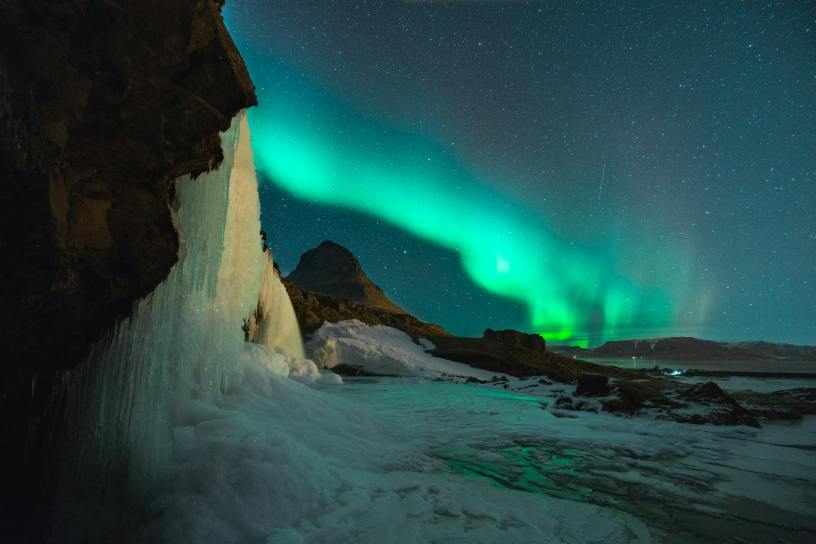
It was not so much the cold as the silence that unnerved them.
The Summit Refuge, a retreat center perched at the edge of the Alaskan wilds, had long offered seclusion to those who could afford to vanish for a while. Writers, mourners, CEOs in crisis—all had found solace among its hand-hewn timbers and panoramic windows overlooking the ragged teeth of the glacier beyond. That glacier, old as silence itself, had not stirred in centuries.
Until the night it moved.
No one heard it, of course. The lodge was built to muffle the world. Even the storm that rolled in with its cracked lightning and thudding snow was barely a whisper behind double-glazed glass and woven cedar walls. But at dawn, the south wing—where six guests had slept—was simply gone.
Not destroyed. Not collapsed.
Swallowed.
The ice had crept forward like a thief in the dark, pressing itself into the architecture with surgical precision, sealing off doors, consuming corridors, and embalming the vanished in a tomb of opaque blue.
Maintenance Manager Clive Ellison was the first to see it. He had gone to inspect a failed heater and returned pale, trembling, insisting that “the glacier has us now” in a voice no one could calm. By afternoon he was speaking in riddles about voices in the frost, dreams etched in permafrost, and something he called the Silence Beneath.
The remaining guests grew uneasy. Their phones failed—no signal. The landline crackled with static and ghostly bursts of breathing. Drones sent to survey the back wing vanished. When the sun dipped below the horizon, it did not rise again.
The nights lengthened.
Dreams turned fetid.
Then the staff began to disappear. Not all at once, but in threes and twos. One left a note etched into a frost-rimed mirror: The glacier remembers. Another was found kneeling in the snow, eyes iced over, mouth agape, a single word whispered with his final breath: return.
Those who remained began to hear things: the sound of footsteps on stone where there was only ice, the muffled echo of knuckles tapping glass beneath the glacier’s surface, and voices—not speaking, but weeping, pleading, laughing in a way that suggested madness and memory were melting together.
One guest—a former linguist—swore the glacier was speaking. That the creaks and groans of the ice were not random, but language. Ancient. Layered. Commanding.
By the thirteenth day, only two remained. A woman named Ellis, and a groundskeeper whose name had long slipped the memory of anyone left alive to recall it. Together they stood before the opaque wall of ice that now pressed into the lounge, sipping at the last of the bourbon and listening to the wind inside whisper:
“We are the memory of cold. The warmth forgets. The cold never does.”
They say Ellis is still there, buried deep within the glacier’s belly, her breath crystallized in prayer, her final thought repeating endlessly beneath the surface: It came for the forgotten.
And it waits for the rest.
 Occupy 2.5