A child knows it first. Children always do.
They sense when something is listening.
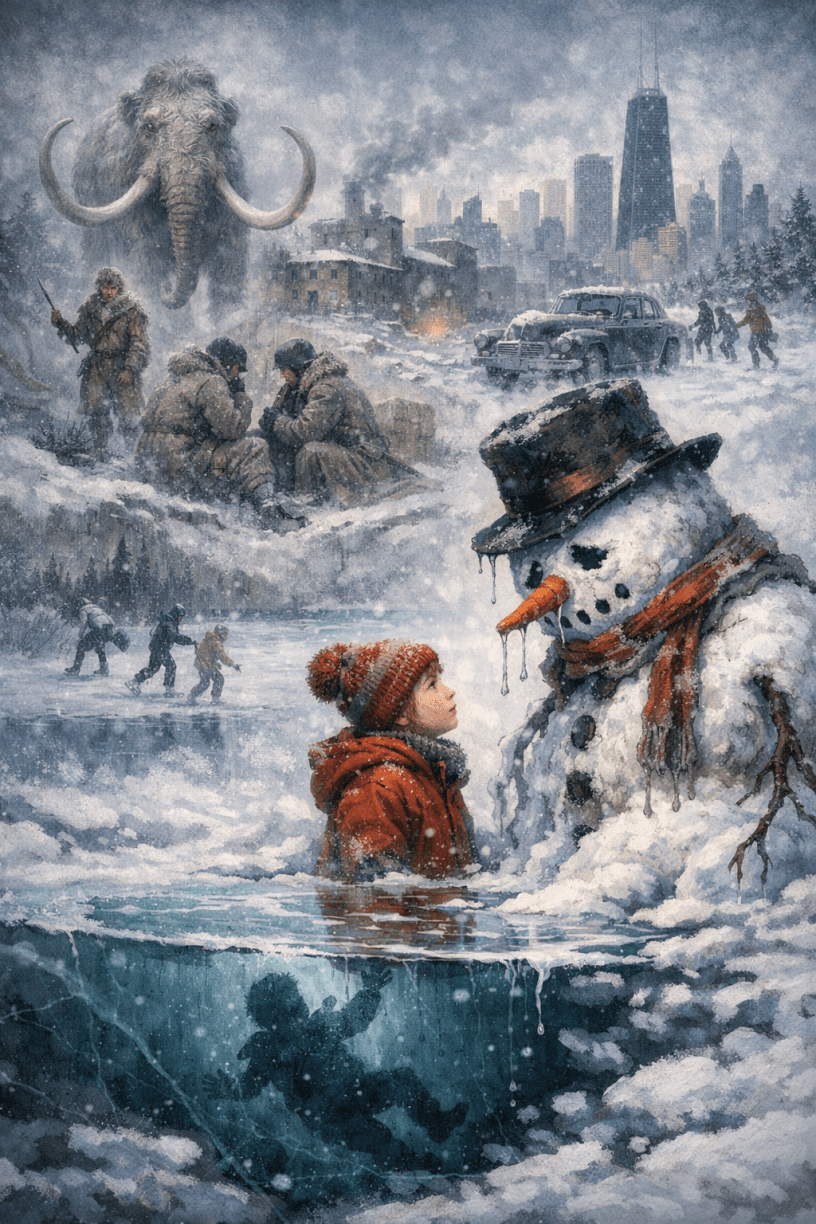
The snowman stands at the edge of the yard, imperfect and leaning, his coal eyes slightly misaligned, his smile uncertain. He does not see the child watching him, but something in the cold tightens, aligns, and recognizes the attention.
The snowman does not remember events the way people do. He does not recall names or dates or stories told indoors. What he knows comes without sequence, without language. It arrives as pressure, as pattern, as an old familiarity settling into place.
He knows the weight of vast things moving slowly. Plains of white pressed flat by enormous feet. Breath steaming in air so cold it burned. Fur brushing past ice that did not yet know it would someday retreat.
He knows stillness—the kind that follows shouting until even hatred freezes. Walls that absorbed men leaning against them. Snow that fell and fell until it covered uniforms, rubble, and the idea that morning would ever come again.
He knows winters stained gray. The sound of boots, laughter cracking ice, radios playing songs too cheerful for the season. Smoke trapped low in the air. Hands shoved into pockets already wet and numb.
He knows the pond.
Not the panic—sound does not last in snow—but the sudden warmth that vanished, the dark that opened and closed again, the ice sealing itself smooth and silent, pretending nothing had happened. Snow remembers that kind of silence very well.
The child shivers, though the cold has not changed. Something about the snowman feels older than the yard, older than the houses crouched along the street. The child cannot say why, only that standing there feels like listening to a story told without words.
Water is old.
Older than winter. Older than the idea of memory.
Each flake that shaped the snowman carries atoms that have traveled the surface of the world for ages—oceans, clouds, rivers, ice, blood, breath. When the cold draws them together, they do not arrive empty. Pressure leaves impressions. Time leaves habits. And when enough of them gather in one place, those habits begin to align.
The snowman does not think.
He remembers by arrangement.
The sun lifts slightly. The snowman feels it first—not pain, but release. Bonds loosen. The ancient travelers begin to separate again, each carrying a faint trace of what the others knew.
The child watches as water darkens the ground.
What remains seeps downward, quiet and complete.
Next winter, the child will listen again.
 Occupy 2.5