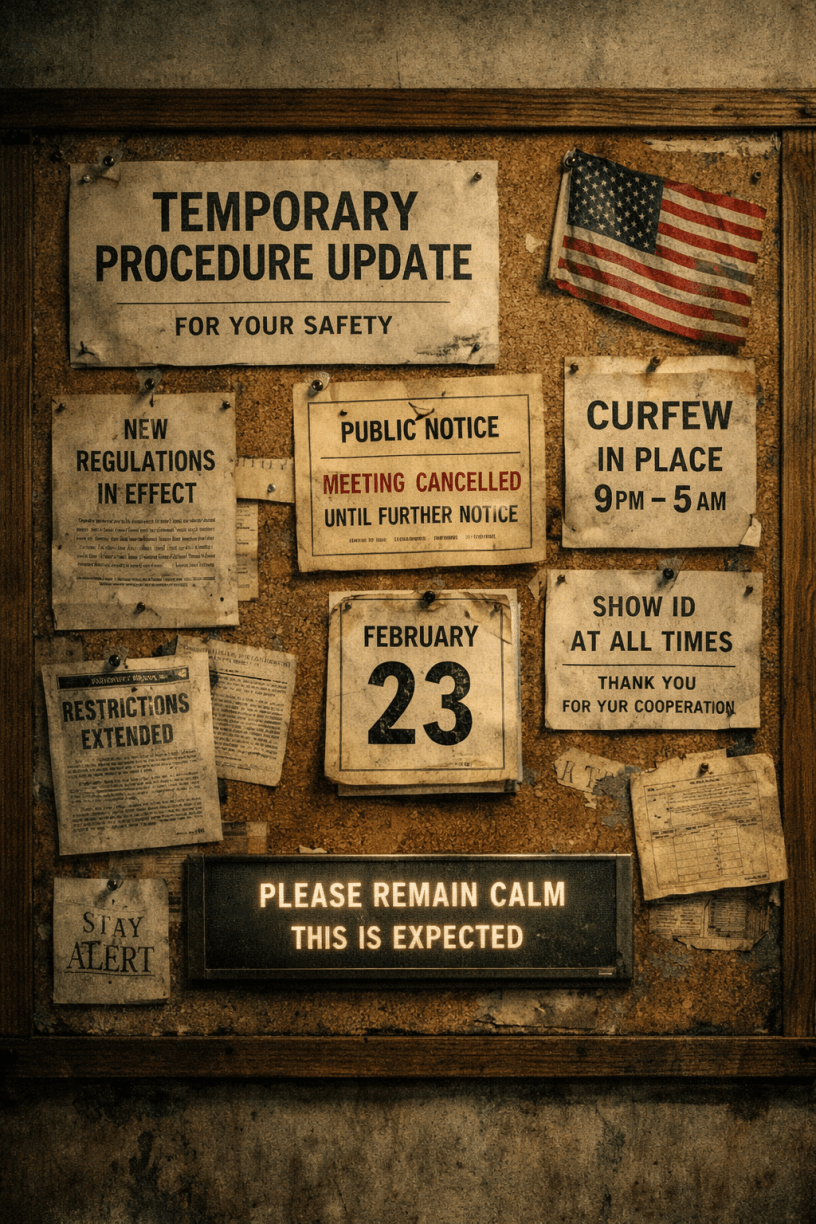
February 23
Everyone agreed it was normal, which meant there was no need to discuss it further. The agreement formed early, before breakfast, while the radio murmured in the kitchen and the kettle took longer than usual to boil. Mrs. Hargreeve noticed the delay first and said nothing, because delays happened now. Her husband glanced at the clock, frowned, and then relaxed when the announcer’s voice continued in its steady, cheerful way.
At the post office, the line moved slowly. A new sign had appeared overnight, printed neatly and taped just a little crooked: TEMPORARY PROCEDURE UPDATE. No one read past the first line. The clerk smiled, apologized without sounding sorry, and asked for identification twice, even from people she had known for years. When Mr. Bell laughed and said she didn’t need to do that, she smiled again and said, “Just for now.” He shrugged. Just for now sounded reasonable.
By midmorning, the sirens passed through town. Not urgently—no wail, no panic—but often enough to be noticed. Someone asked what they were for, and someone else said training, and that was the end of it. The hardware store opened late. The owner explained there had been a mix-up with permits, but it was sorted out. He said this cheerfully, as though permits had always been like the weather, shifting without warning.
At the school, parents gathered for pickup and stood a little farther apart than usual. A teacher reminded them of the new policy about assemblies and lowered voices. Children were no longer allowed to bring certain books from home, though no one could quite remember which ones or why. The list would be updated, they were told. Parents nodded. Lists were helpful.
During lunch, the television in the diner played on mute. A banner scrolled across the bottom of the screen. People read it without comment while chewing, the way they read nutrition labels. The waitress refilled coffee and said it was probably for the best. When asked why, she said she didn’t know, exactly, but it seemed like the kind of thing someone must have thought through.
In the afternoon, a man from the city came to inspect the municipal building. He wore a badge that caught the light when he moved. He spoke politely, took notes, and asked questions that made the clerk nervous without knowing why. When he left, he thanked everyone for their cooperation. The clerk felt oddly proud, as though she had passed a test she hadn’t studied for.
The paper came out late that day. There was less in it than usual, and some of the regular columns were missing. In their place were announcements, clarifications, and a long explanation of why certain stories would no longer be covered “until conditions stabilize.” The editor’s name was printed at the bottom, though no one had seen him in weeks. People skimmed the pages and folded them carefully, because wasting paper felt wrong.
At the grocery store, shelves were rearranged. Familiar items were still there, but not where they belonged. Shoppers wandered the aisles longer than usual, bumping carts and apologizing. A woman complained quietly to her friend, who told her not to make a fuss. “They’re doing their best,” she said, though she couldn’t say who “they” were. The woman nodded and chose a substitute brand.
By evening, the town meeting was canceled. The notice said it would be rescheduled once guidelines were clarified. No date was given. People lingered in the parking lot, unsure whether to go home or wait. Eventually they left, one by one, relieved to have the decision made for them.
At dinner tables across town, conversations stalled. Someone mentioned that things felt different, and someone else said they always felt different in February. It was the longest month, after all. Another person joked that people complained too much these days. Laughter followed, thin but sufficient.
Later, when the power flickered, no one panicked. Candles were lit. Phones were checked. A message appeared on every screen at once, brief and reassuring. PLEASE REMAIN CALM. THIS IS EXPECTED. The wording mattered. Expected things were manageable.
Before bed, Mrs. Hargreeve stood at the window and noticed the streetlights were brighter than usual. Or perhaps fewer were on, making the rest seem brighter by comparison. She considered waking her husband but decided against it. There was nothing to say that hadn’t already been said all day, in smaller ways.
The next morning, February 24, would arrive on schedule. There would be new signs, new procedures, and new explanations. People would adapt, because adaptation was easier than alarm, and agreement was easier than doubt.
After all, everyone agreed it was normal.
 Occupy 2.5