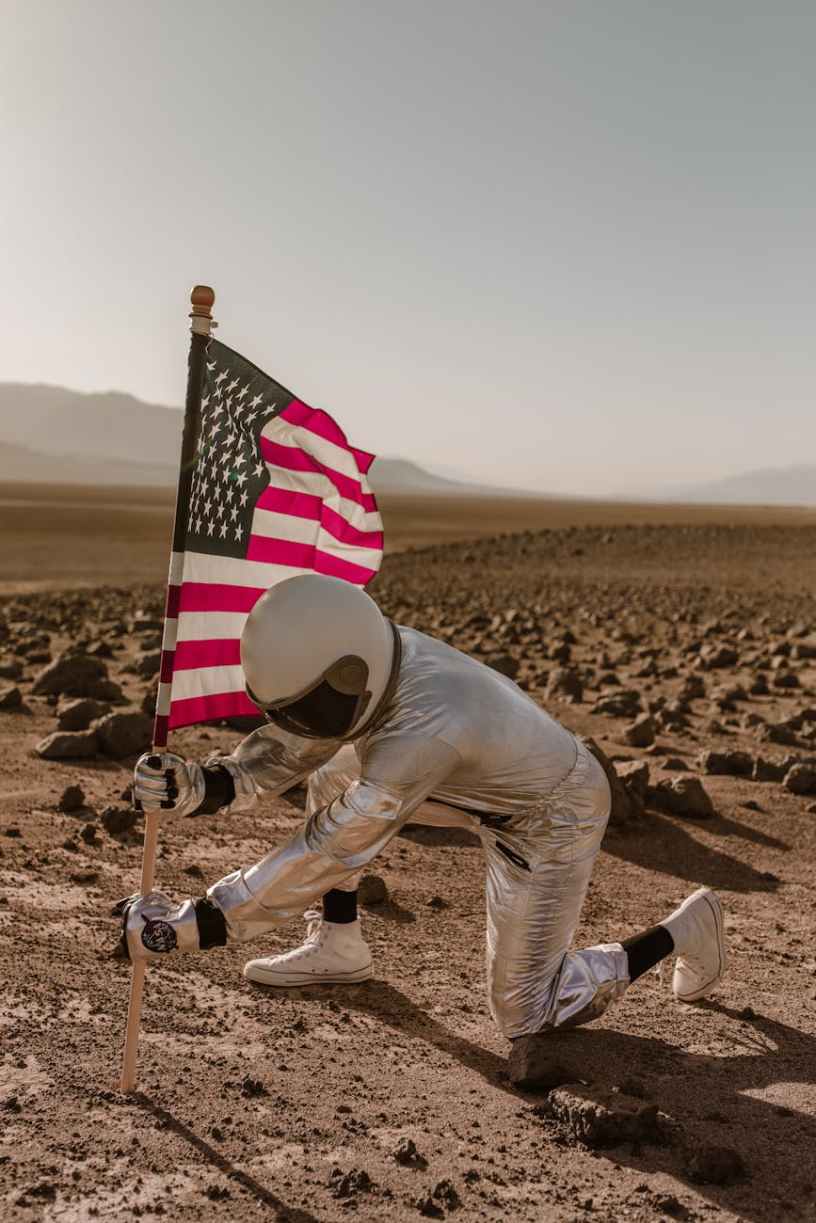
Oh, the delicious irony of history! Picture this: a few centuries ago, Europeans—pale, powdered-wig enthusiasts—sailed to North America in their creaky ships, a few hundred thousand at a time, planting flags and claiming land like it was a cosmic yard sale. Fast forward to today, and the descendants of those wig-wearers clutch their pearls, branding their ancestors “colonizers” with all the scorn of a Yelp review for a bad tapas bar. But hold the quill! What do we call the millions of Asian, Hispanic, and African folks streaming into the same lands today, suitcases stuffed with dreams and maybe a spicy recipe or two? Surely, we need a label as snappy as “colonizer” to keep the historical irony sizzling. Let’s unpack this with a wink and a smirk, shall we?
Back in the 1600s and 1700s, Europeans arrived in North America, driven by a mix of ambition, desperation, and a questionable sense of divine entitlement. They built colonies, displaced Indigenous peoples, and set the stage for centuries of debate. Today, academics and X keyboard warriors alike slap the “colonizer” label on these folks faster than you can say “smallpox blanket.” It’s a term dripping with disdain, evoking images of exploitation and imperial hubris. Fair enough—history’s not exactly a love story. But here’s where the irony kicks in like a plot twist in a M. Night Shyamalan flick: modern North America is seeing millions of newcomers from Asia, Latin America, and Africa, drawn by economic opportunity, safety, or just the allure of a good taco truck. U.S. Census data shows that between 2000 and 2020, over 20 million immigrants arrived, predominantly from these regions (Camarota and Zeigler). So, what’s the label for these modern migrants? “Colonizers 2.0”? “Global Guests”? Or do we just shrug and call them… people?
Let’s lean into the satire. If Europeans were colonizers for showing up uninvited and reshaping the land, surely today’s arrivals deserve a similarly grandiose title. How about “Neo-Explorers of the American Dream”? Catchy, right? After all, they’re navigating borders, bureaucracy, and the occasional “build the wall” chant with the same grit as those old-timey pilgrims dodging scurvy. But here’s the kicker: nobody’s handing out “colonizer” badges to these folks. No, no—the narrative’s flipped. Today’s migrants are often framed as noble strivers, escaping hardship or chasing opportunity, while those old Europeans are retroactively villainized for doing… well, pretty much the same thing, minus the TikTok vlogs. The irony is thicker than a colonial-era corset.
Let’s break it down. The Europeans of yore were fleeing religious persecution, economic stagnation, or just itching for adventure. Sound familiar? Today’s Asian, Hispanic, and African immigrants are often escaping political turmoil, poverty, or climate chaos—yet they’re rarely accused of “colonizing” when they open a bodega or code the next big app. Why the double standard? Could it be that “colonizer” is less about the act of migrating and more about who gets to wear the historical villain cape? The 17th-century settler didn’t exactly RSVP to the Indigenous potluck, but neither does the modern migrant always get a warm welcome. Both groups, past and present, are driven by human instincts—survival, ambition, hope—yet one’s a mustache-twirling imperialist, and the other’s a feel-good diversity story. Oh, the mental gymnastics!
Now, let’s not pretend the contexts are identical. European colonization often came with conquest, displacement, and a knack for rewriting maps. Modern immigration, by contrast, operates within established nation-states, with migrants navigating legal systems, visas, and the occasional ICE van. But the irony persists: both groups arrive in waves, reshape communities, and spark debates about “belonging.” If we’re going to sling “colonizer” at one, shouldn’t we at least consider a playful moniker for the other? How about “Cultural Trailblazers” for the millions bringing pho, salsa, and jollof rice to the North American table? Or maybe “Reverse Pilgrims,” since they’re crossing borders to join the messy experiment those original settlers started?
The satire sharpens when we consider the economic angle. Back then, Europeans were often bankrolled by kings or companies, yet today’s migrants are expected to hustle their way to the American Dream, no royal charter required. And while a tiny fraction of those old colonizers became land barons, the vast majority were scrappy farmers or laborers, not unlike the Uber drivers or farmworkers of today. Yet, the Gates-Musk-Buffett stereotype of “white wealth” lingers, painting all descendants of those settlers as trust-fund tycoons. Meanwhile, the modern migrant is rarely accused of “taking over,” even as their cultural influence—think K-pop or taco trucks—reshapes North American cities faster than you can say “gentrification.” Irony alert: the same folks decrying colonial legacies might be sipping matcha lattes brought by the very “non-colonizers” they champion.
So, what do we call these millions of Asian, Hispanic, and African newcomers? If we’re keeping the satire spicy, let’s try “Global Re-Mixers,” capturing their role in stirring the cultural pot without the baggage of colonial intent. Or maybe we ditch the labels altogether and admit the truth: migration is just humans doing what humans have always done—chasing better lives, screwing up sometimes, and leaving historians to argue over the mess. The irony? We’re all colonizers, pilgrims, guests, or just folks trying to get by, depending on who’s writing the story. Pass the popcorn—this historical plot twist is a riot.
Works Cited
Camarota, Steven A., and Karen Zeigler. “Immigration to the United States, 2000–2020: A Statistical Profile.” Center for Immigration Studies, Oct. 2022, cis.org.
 Occupy 2.5