March 2, 2025
In a series of contentious remarks, former President Donald Trump has amplified tensions with Ukraine by suggesting that President Volodymyr Zelensky bears responsibility for the ongoing war with Russia. These comments, made during a press conference on February 19, 2025, have ignited outrage in Ukraine and created unease ahead of a significant meeting scheduled with Zelensky at the White House on February 28.
During his address, Trump criticized Ukraine for failing to negotiate the terms of peace with Russia before the conflict escalated into an all-out invasion in February 2022. “You should have never started it,” Trump stated, indicating that Ukraine’s leadership should have made concessions to avoid the war altogether. His remarks resonate with longstanding Kremlin narratives that seek to shift blame from Russia’s aggression onto Ukraine.
Trump’s statements were met with sharp disapproval from Zelensky, who asserted that Trump’s rhetoric echoed Russian disinformation. Zelensky stated that such claims undermine the reality of Ukraine’s struggle under a brutal invasion that has seen thousands of lives lost and widespread destruction.
As tensions mounted, Zelensky expressed dissatisfaction with being excluded from the U.S.-Russia negotiations, which took place in Saudi Arabia the same day as Trump’s comments. Following the talks, Secretary of State Marco Rubio defended the decision to proceed without Ukraine, insisting that consultations would still occur with Ukrainian leaders and European partners.
Despite the U.S. administration’s assurances, Trump’s remarks painted a stark portrait of his view of the conflict. He criticized Ukrainian leadership, insisting that they have failed to bring an end to the war and hinting that a “half-baked negotiator could have settled this years ago.” This dismissal of Ukraine’s plight raised concerns among U.S. allies, who fear that Trump’s approach could jeopardize American standing in NATO and undermine ongoing support for Ukraine.
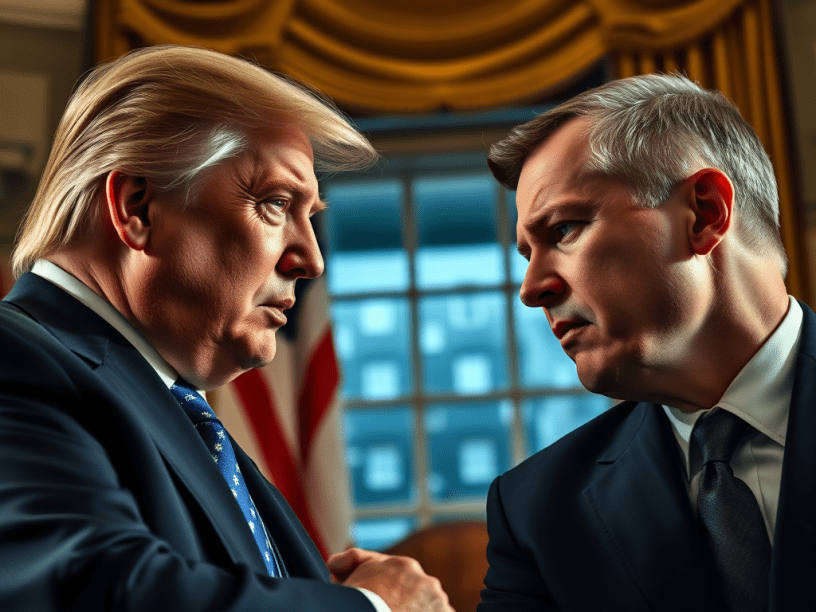
Fast forward to the Oval Office meeting on February 28, the atmosphere was reportedly tense. Rubio, in comments that surfaced after the event, suggested that Zelensky owed Trump an apology for behavior leading up to their confrontation. According to Rubio, statements made off-camera by Trump and Vice President JD Vance during the preceding talks were indicative of a broader frustration directed at Zelensky.
While the specifics of the off-camera exchange between Trump and Vance remain unconfirmed, sources suggest that Trump’s initial cordiality towards Zelensky quickly deteriorated as tensions flared over perceived disrespect. Rubio posited that Zelensky’s actions prior to the meeting contributed to what he described as an “unacceptable” scenario.
As the dust settles from a politically charged meeting, the implications of Trump’s remarks regarding Ukraine linger, fueling debate over the future of U.S. support and diplomatic engagement in the region. With many interpreting Trump’s comments as a pivot away from unwavering support for Ukraine, the international community watches closely as the situation continues to unfold.
As both Trump and Zelensky navigate the fallout from their interactions, one thing remains clear: the stakes in this complex geopolitical landscape are higher than ever, and the journey towards peace will undoubtedly be fraught with challenges and controversial rhetoric.
Sources:
- Lepore, Stephen M. “Marco Rubio Reveals That What Zelensky Did Before Cameras Started Rolling Is Reason Why He Should Apologize.” Daily Mail, 28 Feb. 2025, http://www.dailymail.com.
- Spike, Justin. “Trump Says Ukraine Started the War That’s Killing Its Citizens. What Are the Facts?” Associated Press, 21 Feb. 2025, apnews.com/article/trump-ukraine-facts.
- De Ruiter, Emma. “Trump Suggests Ukraine at Fault for War, Defends US-Russia Talks in Saudi Arabia.” Euronews, 19 Feb. 2025, http://www.euronews.com/world/trump-ukraine-fault-us-russia-talks.
- Murphy, Matt, and Jake Horton. “Fact-Checking Trump Claims About War in Ukraine.” BBC Verify, 21 Feb. 2025, http://www.bbc.com/news/world-us-canada-64598210.
 Occupy 2.5