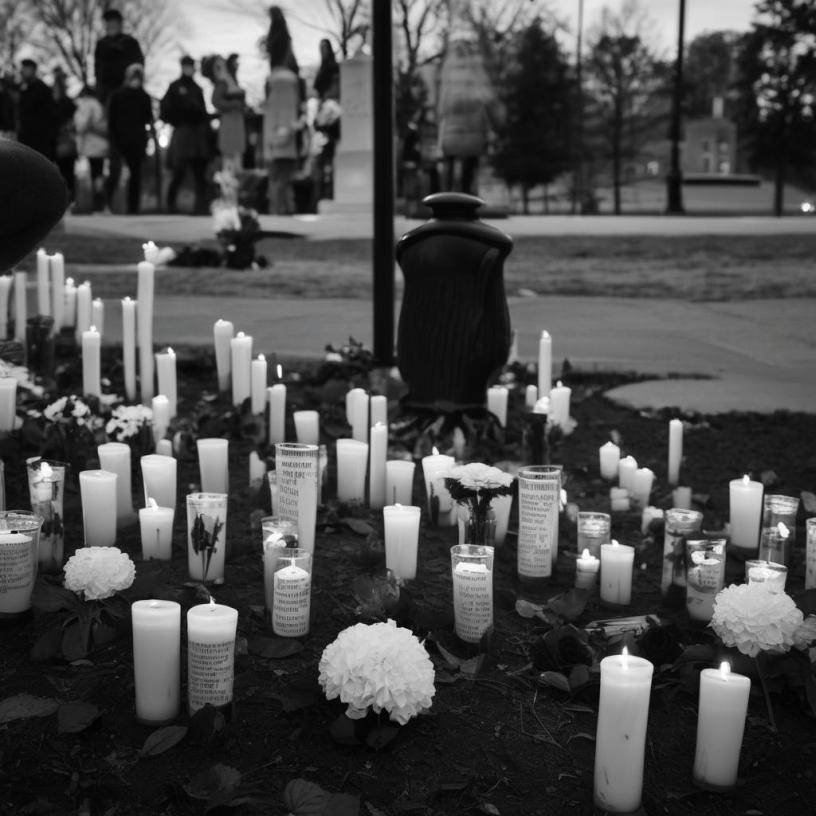
On May 4, 1970, the Ohio National Guard opened fire on unarmed students at Kent State University.
Four students were killed: Allison Krause, Jeffrey Miller, Sandra Scheuer, and William Schroeder. Nine others were wounded, including Dean Kahler, who was paralyzed. The shootings lasted 13 seconds, during which 67 rounds were fired (en.wikipedia.org).
The protest was in response to President Nixon’s announcement of the U.S. invasion of Cambodia. Tensions were already high. Students had protested for days. There had been confrontations with local police and the burning of the ROTC building. The Governor of Ohio, James Rhodes, called in the National Guard to restore order (history.com).
On May 4, thousands of students gathered to protest. Guardsmen ordered them to disperse. Some students threw rocks. The Guard advanced. Without clear warning, Guardsmen turned and fired into the crowd.
On May 4, 1970, the National Guard opened fire on Kent State students, killing four and wounding nine. This analysis revisits the tragedy, the legal aftermath, and the enduring lessons about civil liberties and state power in America.
Legally, eight Guardsmen were indicted on charges of depriving the students of their civil rights. All were acquitted. None of the Guardsmen were proven to have had orders to shoot. Testimony revealed confusion, poor communication, and panic among the troops. Some claimed they feared for their lives. However, the students were largely unarmed and distant. No evidence showed a real threat that would justify deadly force. The legal system found no specific intent to violate civil rights, which was required for conviction under federal law (engagedscholarship.csuohio.edu).
Dean Kahler, one of the wounded students, survived and became an advocate for disability rights. Kahler had just begun his college career and was majoring in education. He came from a rural background and had hoped to teach history. On May 4, he attended the protest out of concern for the direction of the country, believing deeply in peaceful protest. He was shot in the back while fleeing and suffered a severed spinal cord. His injuries left him paralyzed from the chest down. Kahler underwent months of painful rehabilitation. Despite his injuries, he completed his degree and dedicated his life to activism for people with disabilities. His story exemplifies resilience and the long-term impact of that day’s events (kent.edu).
The acquittal of the Guardsmen was rationalized by the jury based on the difficulty of proving that the soldiers intended to violate civil rights. U.S. District Judge Frank J. Battisti ruled that while the killings were tragic, there was insufficient evidence of specific intent. Later legal scholars have argued that the law was poorly suited to address such abuses. Proving state actors’ intent to deny civil rights is extremely hard. The chaotic nature of the event, lack of clear commands, and claims of self-defense further complicated the case. Some scholars point to Kent State as proof that American law struggles to hold authorities accountable for excessive violence (en.wikipedia.org; engagedscholarship.csuohio.edu).
The Kent State shootings reveal troubling realities about authority in the United States. They show how quickly peaceful protest can be met with lethal force. They show how difficult it is to hold those in power legally accountable. They show the enduring need for vigilance, transparency, and protection of civil liberties. Fifty years later, the lessons of Kent State still demand our attention.
APA Citations:
- History.com Editors. (2017, September 8). Kent State shooting. History. https://www.history.com/articles/kent-state-shooting
- Kent State University. (n.d.). Dean Kahler: Survivor. https://www.kent.edu/president/news/dean-kahler-survivor
- Kent State University. (n.d.). Stories from survivors. https://www.kent.edu/may4kentstate50/stories-survivors
- Kent State University. (n.d.). From remembrance to renewal. https://www.kent.edu/president/remembrance-renewal
- Kent State University. (n.d.). Voices of May 4. https://www.kent.edu/president/voices-may-4
- Kent State University. (2024, April 4). Dean Kahler’s ‘One Bad Day’ Fuels a Lifetime of Purpose. https://www.kent.edu/alumni/news/dean-kahlers-one-bad-day-fuels-lifetime-purpose
- Wikipedia contributors. (2025, April 25). Kent State shootings. Wikipedia. https://en.wikipedia.org/wiki/Kent_State_shootings
- Wikipedia contributors. (2025, April 25). Dean Kahler. Wikipedia. https://en.wikipedia.org/wiki/Dean_Kahler
 Occupy 2.5