April 28, 2026
The complaint was filed correctly.
That, more than anything else, made it difficult to ignore.
It arrived through established channels, properly formatted, properly routed, and addressed to the appropriate committees within the United Nations. It cited precedent, referenced scientific authority, and included a concise summary of the grievance.
There were no errors.
There were no omissions.
There was, however, a problem.
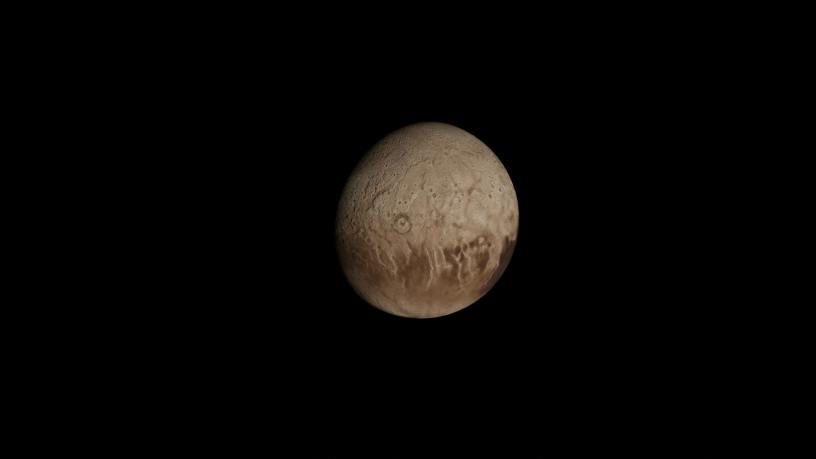
The subject of the complaint had been discovered in 1930 by Clyde Tombaugh at Lowell Observatory.
At the time, it was classified as a planet.
This classification was accepted without objection.
For decades, it remained so.
Over time, observations improved.
Measurements were refined.
The object was found to be smaller than originally believed.
Its orbit was found to be irregular.
Other objects, similar in size and composition, were identified in the region beyond Neptune.
These discoveries did not alter the object itself.
They altered the context in which it was understood.
In 2006, the International Astronomical Union established a formal definition of the term “planet.”
The definition required, among other things, that a planet clear its orbital neighborhood.
The object in question did not.
It had not done so previously.
It did not begin to fail in 2006.
It had always existed in that condition.
The classification changed.
The object did not.
The complaint stated this clearly.
It did not dispute the observations.
It did not contest the measurements.
It did not challenge the authority of the scientific body that had made the determination.
It objected only to the conclusion.
A hearing was scheduled.
The representative did not arrive in any form that could be easily described.
There was a presence.
There was a point at which attention gathered.
There was, in the room, an understanding that something had arrived.
That was sufficient.
“State your name for the record,” the chair said.
There was a pause.
Then:
“We have been called many things.”
The chair made a note.
“You are here in reference to a change in classification,” the chair continued.
“That is correct.”
“You were previously designated a planet.”
“We were.”
“And you are now designated a dwarf planet.”
“That is what you have written.”
“Do you dispute the scientific basis for this change?” a delegate asked.
“No.”
“Do you dispute the definition itself?”
“We note that it was altered.”
The room was quiet.
“The current definition requires that a planet clear its orbital neighborhood,” another delegate said.
“Yes.”
“You do not meet this requirement.”
“We did not meet it before.”
A pause.
“Then the classification was incorrect.”
“The classification was… convenient.”
“Are you asserting that the current classification is invalid?”
“We are asserting that the object has remained consistent.”
The chair looked down at the document.
“Your complaint states that you have been redefined.”
“That is correct.”
“And that this redefinition has consequences.”
“It does.”
“Please elaborate.”
There was a moment, brief and precise, during which the room seemed to settle around the absence of a speaker.
Then:
“You have adjusted your language,” the representative said.
“You have not adjusted us.”
No one spoke.
“For seventy-six of your years,” the representative continued, “we were recognized as a planet.”
“That recognition was based on incomplete information,” a delegate replied.
“All recognition is.”
Another pause.
“Are you requesting reinstatement of planetary status?” the chair asked.
“No.”
“Then what is the nature of your request?”
“That the record reflect the distinction between change in observation and change in existence.”
The clerk wrote this down.
Carefully.
“Your current classification will remain,” the chair said after a moment. “The scientific criteria are not under review in this forum.”
“That is understood.”
“Then what outcome do you seek?”
A pause.
Then:
“You changed the definition.”
“We continued to exist.”
The room remained still.
“The committee will take this matter under advisement,” the chair said.
“That is acceptable.”
The presence receded.
Not abruptly.
Not dramatically.
Simply no longer there.
The paperwork remained.
It was complete.
It was properly filed.
It could not be resolved.
 Occupy 2.5